

Published: 6 November 2026
Medically reviewed by Dr. Pranay Shah, MS (Obs. & Gyn.), Founder, Director & Chief Fertility and IVF Specialist, Wellspring IVF & Women’s Hospital, Ahmedabad
Last medically reviewed: 6 November 2026
In short: see a fertility specialist after 12 months of regular unprotected intercourse if the woman is under 35, after 6 months if she is 35 or older, and without waiting if she is over 40. Do not wait at all if either partner has a known cause of infertility, such as absent or very irregular periods, known endometriosis, previous pelvic surgery or infection, or a very low sperm count. These timelines come from the American Society for Reproductive Medicine (ASRM) and are consistent with NICE guidance in the UK.
Why the age thresholds matter
About 80 to 85 per cent of couples conceive within a year of trying. Not conceiving in that time is the usual definition of infertility. For women aged 35 and over, the threshold is shortened to six months because the number and genetic quality of eggs decline faster from the mid-thirties, so time spent waiting has a real cost. Above 40, guidelines recommend evaluation and treatment straight away.
If you are unsure how much your age or egg reserve changes things, our article on low AMH and ovarian reserve explains what the tests can and cannot tell you.
Warning signs that mean you should not wait
For women
- Periods that are absent, or regularly shorter than 21 days or longer than 35 days.
- Very painful periods or pain during intercourse, which can point to endometriosis.
- Known fibroids, polyps, PCOS or thyroid disease.
- Previous pelvic infection, ectopic pregnancy or abdominal or pelvic surgery.
- Two or more miscarriages.
For men
- A previous abnormal semen analysis.
- Undescended testes in childhood, testicular injury or surgery, or a varicocele.
- Previous chemotherapy or radiotherapy, or use of testosterone or anabolic steroids.
- Low libido or erectile or ejaculation problems.
A male factor is involved in roughly half of couples who cannot conceive, so both partners should be assessed together. Our guide to male infertility causes and tests explains the male side of the evaluation.
Situations where you should see a specialist before trying
- Before cancer treatment: chemotherapy and radiotherapy can damage eggs and sperm. Freezing eggs, embryos or sperm should be discussed before treatment starts; see egg freezing.
- Known genetic disease in the family, such as thalassaemia, where testing of embryos may be possible.
- Single women or couples planning to delay pregnancy who want to understand their options.
What happens at the first visit
A good first consultation is mostly about history and a focused set of tests, not immediate treatment. Expect:
- A detailed history from both partners, including cycles, previous pregnancies, surgery, medicines and lifestyle.
- A transvaginal ultrasound to look at the uterus and ovaries and count antral follicles.
- Blood tests such as AMH and, when indicated, thyroid function, prolactin and others.
- A semen analysis, interpreted against the WHO 2021 reference values.
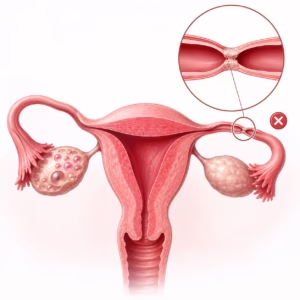
- A test of tubal patency, such as HSG or sono-HSG, when it will change the plan.
Many couples need only simple treatment, such as timed intercourse, ovulation induction or IUI. IVF is the right next step only in specific situations, which our article on when IVF is the right next step sets out.
What to look for in a fertility specialist
- Formal training in obstetrics and gynaecology and in assisted reproduction.
- A clinic registered under the ART (Regulation) Act 2021.
- A willingness to test both partners and to explain why each test or treatment is needed.
- Honest, age-specific discussion of success rates, rather than a single headline figure.
- Personal involvement in the key procedures, such as egg collection and embryo transfer.
At Wellspring IVF, couples are seen by Dr. Pranay Shah, IVF specialist in Ahmedabad, who personally performs egg collections, embryo transfers and fertility surgery. If you have been trying for longer than the timelines above, you can read Dr. Shah’s qualifications and experience and arrange a first consultation at our fertility clinic in Ahmedabad.
How fertile is a healthy couple each month?
Even when everything is normal, conception is not instant. A healthy couple in their twenties or early thirties has roughly a one-in-four to one-in-five chance of conceiving in any single month. That is why most couples take several months, and why a year is the standard point at which to investigate. From the mid-thirties the chance per month falls and the risk of miscarriage rises, mainly because a higher proportion of eggs carry chromosomal errors. Male fertility also declines with age, more gradually.
Secondary infertility: when you already have a child
Having had a baby before does not rule out a fertility problem now. Difficulty conceiving after a previous pregnancy is called secondary infertility, and it is common. Causes include a fall in egg reserve with age, new tubal damage after infection or a caesarean section, scarring inside the uterus after surgery or infection, weight change, thyroid disease and a new male factor. The same timelines apply: 12 months of trying under 35, six months at 35 or over, and an earlier visit if there is a warning sign.
Myths that delay couples from seeking help
- “Infertility is usually the woman’s problem.” A male factor contributes in roughly half of couples, so both partners need to be tested.
- “Regular periods mean everything is fine.” Regular cycles usually mean ovulation is happening, but they say nothing about the tubes, egg reserve, the uterine cavity or sperm.
- “We conceived before, so we will again.” Secondary infertility is common, as above.
- “Just relax and it will happen.” Stress is understandable, but it is rarely the main cause, and waiting too long can reduce the options when there is a real medical problem.
- “Seeing a specialist means we will need IVF.” Most couples who are assessed need simple treatment or none at all.
How to prepare for your first appointment
A little preparation makes the first consultation far more productive:
- Note the dates of your last three to six periods and the usual cycle length.
- Bring every previous report: ultrasounds, blood tests, semen analyses, HSG, surgery notes and records of any earlier IUI or IVF cycles, including the medicines and doses used.
- List all current medicines and supplements for both partners.
- Write down your questions in advance, so that nothing important is forgotten.
- Plan for both partners to attend. Many clinics can arrange a semen analysis on the same day; ask about abstinence instructions, usually two to five days, when you book.
Questions worth asking the specialist
- What do you think is the most likely reason we have not conceived yet?
- Which tests do we need, and how will each result change the plan?
- What are our options, starting with the simplest, and what is the realistic chance of success with each for our age and diagnosis?
- How long should we try each option before moving to the next?
- What can we do ourselves, starting now, to improve our chances?
What you can do while you wait for your appointment
- Start folic acid. Women trying to conceive should take 400 micrograms of folic acid daily, ideally from at least a month before conception, to lower the risk of neural tube defects. Some women need a higher dose, which your doctor will advise.
- Have intercourse every two to three days through the cycle. This covers the fertile window without the stress of timing every attempt.
- Stop smoking, for both partners, and keep alcohol low.
- Aim for a healthy weight. Being significantly underweight or overweight can disturb ovulation and lower sperm quality, and even modest weight loss can restore ovulation in women with PCOS.
- Review medicines with your doctor, including testosterone or anabolic steroid use by the male partner, which can stop sperm production.
- Check rubella immunity and other routine pre-pregnancy screening if not already done.
Frequently asked questions
How long should we try before seeing a fertility specialist?
Twelve months of regular unprotected intercourse if the woman is under 35, and six months if she is 35 or older. If she is over 40, or either partner has a known problem such as absent periods, endometriosis or a very low sperm count, see a specialist straight away.
Should both partners come to the first fertility appointment?
Yes. A male factor contributes in about half of couples who cannot conceive, and a semen analysis is one of the first tests. Seeing both partners together avoids months of testing only one person.
What tests are done at the first fertility visit?
Usually a pelvic ultrasound with an antral follicle count, blood tests such as AMH and, when indicated, thyroid function and prolactin, a semen analysis, and a test to check that the fallopian tubes are open. The exact tests depend on your history.
Is it too early to see a fertility specialist after one miscarriage?
One miscarriage is common and usually does not need specialist tests. After two or more pregnancy losses, an evaluation is recommended.
Can I see a fertility specialist before trying to conceive?
Yes. A pre-conception visit is useful if you have irregular periods, a known medical condition, a family history of genetic disease, or need cancer treatment, in which case egg or sperm freezing should be discussed before treatment starts.
Do I need a referral to see a fertility specialist in India?
No. In India you can book a consultation directly with a fertility specialist without a referral from a general physician or gynaecologist. Bring all previous reports and treatment records to the first visit.
We already have a child. Can we still have a fertility problem?
Yes. Secondary infertility, difficulty conceiving after a previous pregnancy, is common. Age-related decline in egg reserve, tubal damage, scarring in the uterus, thyroid disease and new male factors are frequent causes. The same 12-month and 6-month timelines apply.
What can we do at home to improve our chances before the appointment?
Take 400 micrograms of folic acid daily, have intercourse every two to three days, stop smoking, keep alcohol low, aim for a healthy weight, and review any medicines, including testosterone or steroids in the male partner, with your doctor.
Sources
- Practice Committee of the American Society for Reproductive Medicine. Fertility evaluation of infertile women: a committee opinion (2021); Definition of infertility (2023).
- National Institute for Health and Care Excellence. Fertility problems: assessment and treatment (CG156).
- World Health Organization. Laboratory manual for the examination and processing of human semen, 6th edition (2021).