
Medically Reviewed & Authored by Dr. Pranay Shah (MS Obs. & Gyn.), Founder, Director & Chief Fertility and IVF Specialist at Wellspring IVF & Women’s Hospital, Satellite, Ahmedabad. Last Updated: October 2026.
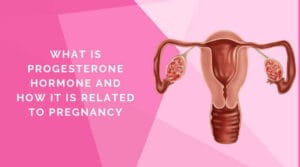
Clinical Summary: Progesterone is the hormone that prepares the lining of the womb for an embryo and keeps an early pregnancy going. After ovulation it is made by the corpus luteum in the ovary. In IVF it is checked closely: a level that rises too early (above about 1.5 ng/mL on trigger day) can lower the chance of implantation after a fresh transfer, and in a medicated frozen embryo transfer a low level on transfer day (below about 9–10 ng/mL) is linked to fewer live births.
The Biological Lifecycle of Progesterone: From Follicular Rupture to Placentation
Progesterone is a 21-carbon steroid hormone synthesized from circulating cholesterol. Throughout the female reproductive cycle, its secretion follows three distinct physiological phases:
- Follicular Phase (Quiescent Baseline): Prior to ovulation, serum progesterone remains suppressed at baseline concentrations below 0.5 to 1.0 ng/mL. During this stage, estradiol produced by growing antral follicles drives cellular proliferation, thickening the endometrial lining into a classic multi-layered, triple-line architecture.
- The Luteal Phase (The Corpus Luteum Engine): Following the mid-cycle luteinizing hormone (LH) surge, the ruptured follicle collapses and reorganizes into the corpus luteum. Granulosa lutein cells rapidly vascularize and begin secreting massive amounts of progesterone alongside estradiol. Peak secretion occurs 6 to 8 days post-ovulation, reaching 10 to 25 ng/mL.
- The Luteal-Placental Shift: If an embryo implants, developing syncytiotrophoblast cells secrete human chorionic gonadotropin (beta-hCG), which “rescues” the corpus luteum and sustains progesterone production through early pregnancy. Around gestational weeks 8 to 10, the mature placenta assumes full steroidogenic capacity—a transition known as the luteal-placental shift—allowing the corpus luteum to regress.
Endometrial Transformation: Opening the Molecular Window of Implantation
Estrogen builds the house; progesterone makes it livable. Without adequate progesterone exposure, an estrogen-primed endometrium remains proliferative, proliferative cells continue uncontrolled mitosis, and the uterine lining is actively inhospitable to an embryo.
Under the influence of rising progesterone:
- Cellular Arrest & Secretory Shift: Glandular epithelial mitosis ceases completely within 48 to 72 hours. Endometrial glands become tortuous and distended, secreting glycogen-rich fluid (uterine milk) that nourishes the pre-implantation blastocyst.
- Pinopode Emergence: Microscopic, finger-like projections called pinopodes appear on the luminal epithelial surface, expressing cell adhesion molecules (integrin alpha-v-beta-3 and L-selectin ligands).
- Stromal Decidualization: Endometrial stromal cells transform from elongated fibroblast-like cells into rounded, lipid- and protein-rich decidual cells, creating a protective immunological barrier that regulates trophoblast invasion and prevents maternal immune rejection.
- Myometrial Quiescence: Progesterone blocks calcium influx into uterine smooth muscle cells, preventing rhythmic contractions that could expel an attaching embryo.
In women with a history of a persistently thin endometrium, coordinating the exact timing and duration of progesterone exposure is essential to ensure histological synchronization with the developing embryo.
Clinical Progesterone Thresholds Across Reproductive Pathways
Understanding exact serum progesterone values helps patients interpret laboratory reports across natural conception, diagnostics, and IVF:
| Clinical Scenario | Blood Test Timing | Target Serum Progesterone Value | Clinical Significance & Action |
|---|---|---|---|
| Ovulation Confirmation | Day 21 of 28-day cycle (or 7 days post-LH surge) | > 3.0 ng/mL (ovulation occurred); > 10.0 ng/mL (robust luteal function) | Values <3.0 ng/mL indicate anovulation or luteal phase deficiency, highly prevalent in women with PCOD and PCOS |
| Fresh IVF Trigger Day | Morning of hCG or GnRH agonist trigger injection | < 1.5 ng/mL (Ideal for fresh transfer) | If > 1.5 ng/mL, the endometrium has matured prematurely. Performing a fresh transfer drops implantation by 50%; all blastocysts should be vitrified for a subsequent FET |
| Programmed (HRT) FET Day of Transfer | Morning of blastocyst transfer | > 9.2 – 10.0 ng/mL (Minimum threshold); 12.0 – 20.0 ng/mL (Optimal range) | Values <9.2 ng/mL reflect poor vaginal absorption; requires immediate rescue with subcutaneous or intramuscular progesterone to protect live birth rates |
| Early First Trimester (Natural / Fresh IVF) | 4 to 6 weeks of gestation | > 15.0 – 25.0 ng/mL | Stable production from corpus luteum; values <10.0 ng/mL warrant investigation for ectopic pregnancy or threatened miscarriage |
Fresh IVF vs. Frozen Embryo Transfer (FET): Two Completely Different Progesterone Realities
One of the most common points of confusion for patients is why progesterone protocols differ so dramatically between a fresh IVF cycle and a frozen embryo transfer (FET):
1. In a Fresh IVF Cycle: The Multi-Corpora Lutea Hyper-Response
During controlled ovarian stimulation, multiple follicles are recruited. Following egg retrieval, every aspirated follicle forms a corpus luteum. Consequently, endogenous progesterone production is astronomically high. However, because pituitary suppression drugs (GnRH antagonists) abruptly eliminate the brain’s natural LH signals within days of retrieval, luteal phase support with vaginal micronized progesterone is still required to bridge the gap until implantation occurs.
2. In a Programmed (Artificial / HRT) FET Cycle: The Zero-Corpus Luteum Reality
In an artificial FET cycle, high-dose oral estradiol tablets suppress pituitary FSH and LH, preventing any follicles from growing.Crucial Clinical Reality: Because no follicle ever matures or ovulates, a woman in a programmed FET cycle has ZERO corpora lutea and produces ZERO endogenous progesterone.
Her pregnancy depends 100% on external pharmaceutical administration. If she stops her medication, progesterone levels drop to zero, precipitating complete endometrial shedding. In contemporary reproductive medicine, our clinic monitors serum progesterone on transfer morning; if levels are suboptimal due to poor vaginal absorption, adding water-soluble subcutaneous progesterone (such as Lubion) or intramuscular progesterone rescues the cycle without cancellation.
Progesterone in Threatened and Recurrent Miscarriage: The PRISM Trial Evidence
In women with a history of early pregnancy loss or recurrent miscarriage, progesterone has historically been prescribed empirically. Landmark high-level evidence published in the New England Journal of Medicine (The PRISM Trial, Coomarasamy et al., 2019/2020) clarified exactly who benefits:
- First Pregnancy with Bleeding (No Prior Losses): Vaginal micronized progesterone provided no statistically significant improvement in live birth rates compared to placebo (75% vs. 72%).
- Early Bleeding with ≥1 Prior Miscarriage: Vaginal micronized progesterone (400 mg twice daily until 16 weeks) produced a statistically significant increase in live births (75% vs. 70%).
- Early Bleeding with ≥3 Prior Miscarriages: The absolute benefit climbed to 15 percentage points (72% live birth with progesterone vs. 57% with placebo).
This evidence confirms that in recurrent loss patients, progesterone supplementation stabilizes the decidual-trophoblast interface and prevents immunological loss.
At Wellspring IVF & Women’s Hospital—our reproductive medicine clinic in Ahmedabad—Dr. Pranay Shah personalizes every luteal phase protocol based on individual serum hormone kinetics, ensuring optimal endometrial receptivity and maximum live birth safety.
Frequently Asked Questions (FAQ)
What are the side effects of progesterone tablets and suppositories?
Because progesterone naturally relaxes gastrointestinal and vascular smooth muscle, common side effects include mild abdominal bloating, constipation, breast tenderness, fatigue, and mild dizziness. Vaginal suppositories also produce harmless white or chalky discharge.
Can high progesterone cause a false positive pregnancy test?
No. Pregnancy tests detect Human Chorionic Gonadotropin (beta-hCG), an entirely different protein hormone secreted by the developing placenta. Exogenous progesterone will never cause a false-positive pregnancy test.
Why do some women need injections instead of vaginal capsules?
Vaginal absorption varies widely between women based on vaginal vascularity, mucosal thickness, and enzymatic breakdown. Approximately 15% to 25% of women exhibit suboptimal serum progesterone levels (<9.2 ng/mL) despite high-dose vaginal capsules. For these patients, adding subcutaneous or intramuscular progesterone ensures adequate systemic and uterine tissue concentrations.
Scientific Citations & References
- Labarta, E., et al. (2017). Low serum progesterone on the day of embryo transfer is associated with a lower live birth rate in artificial FET cycles. Human Reproduction, 32(12), 2437–2442.
- Bosch, E., et al. (2010). Circulating progesterone levels and ongoing pregnancy rates in controlled ovarian stimulation for IVF/ICSI. Human Reproduction, 25(8), 2092–2100.
- Coomarasamy, A., et al. (2019). A randomized trial of progesterone in women with bleeding in early pregnancy (PRISM). New England Journal of Medicine, 380(19), 1815–1824.
- Practice Committee of the American Society for Reproductive Medicine. (2021). Comparison of pregnancy outcomes with different luteal phase support protocols in assisted reproduction: a committee opinion. Fertility and Sterility, 116(5), 1262–1271.