
Medically Reviewed & Authored by Dr. Pranay Shah (MS Obs. & Gyn.), Founder, Director & Chief Fertility and IVF Specialist at Wellspring IVF & Women’s Hospital, Satellite, Ahmedabad. Last Updated: October 2026.
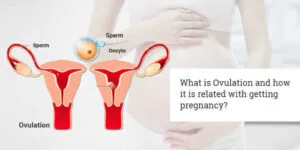
Clinical Summary: Ovulation is the release of a mature egg from the ovary, set off by a surge of luteinising hormone (LH) from the brain. The egg survives only 12 to 24 hours, but sperm can live for up to five days, so the fertile window is the five days before ovulation plus ovulation day. The best chance of pregnancy comes from intercourse in the two days just before ovulation.
The Hypothalamic-Pituitary-Ovarian (HPO) Axis: The Master Clock of Ovulation
Ovulation is not a localized, isolated ovarian event; it is the culmination of a tightly synchronized neuroendocrine dialogue between the brain and the ovaries:
- Hypothalamic Pulsing: The hypothalamus in the brain releases pulsatile bursts of Gonadotropin-Releasing Hormone (GnRH) into the hypophyseal portal circulation.
- Pituitary Response: These pulses stimulate the anterior pituitary gland to synthesize and release two vital gonadotropins: Follicle-Stimulating Hormone (FSH) and Luteinizing Hormone (LH).
- Follicular Recruitment & Estradiol Escalation: During the early follicular phase of the menstrual cycle, rising FSH recruits a small cohort of antral follicles. Granulosa cells within these growing follicles proliferate and produce increasing concentrations of estradiol.
- Dominant Follicle Selection: By cycle days 6 to 8, one follicle becomes dominant, developing the highest density of FSH receptors and growing at an average rate of 1.5 to 2.0 mm per day, reaching a pre-ovulatory diameter of 18 to 22 mm.
- The Positive-Feedback Switch: While moderate estradiol levels suppress pituitary secretion, sustained high estradiol levels (exceeding 200 pg/mL for at least 48 hours) trigger a profound neuroendocrine positive-feedback switch, unleashing a massive, sudden surge of Luteinizing Hormone.
The LH Surge and Ovulation Clock: Precision Timing Explained
Many couples track ovulation using commercial urinary LH test strips, but misunderstand how the biological clock actually unfolds:
- Onset of LH Surge to Ovulation: Follicular rupture occurs approximately 28 to 36 hours after the initial onset of the LH surge in the bloodstream.
- Peak of LH Surge to Ovulation: Ovulation occurs approximately 10 to 12 hours after the peak LH concentration is reached.
- Intrafollicular Rupture Dynamics: The LH surge activates intrafollicular proteolytic enzymes (matrix metalloproteinases, collagenase, and plasmin) that break down the follicular wall at the ovarian surface (stigma). Concurrently, prostaglandin F2-alpha stimulates local ovarian smooth muscle contraction, gently extruding the oocyte-cumulus complex into the waiting fimbriae of the fallopian tube.
Cellular Lifespans: The Asymmetry Between Egg and Sperm
Human reproduction operates under strict temporal constraints:
- The Ovulated Egg: A mature oocyte remains viable for fertilization for only 12 to 24 hours after release. Beyond 24 hours, aging oocytes undergo rapid mitochondrial degradation, cortical granule hardening, and cellular apoptosis.
- Sperm Viability: In stark contrast, healthy spermatozoa deposited into estrogen-rich, fertile cervical mucus can survive and maintain fertilizing capacity for 3 to 5 days within the uterine crypts and fallopian tube ampulla.
The 6-Day Fertile Window: Why the “Day 14 Rule” Is a Costly Myth
The ubiquitous advice that “every woman ovulates on Day 14” is scientifically inaccurate and causes countless couples to miss their fertile window entirely:
- Cycle Phase Variability: In an average menstrual cycle, the luteal phase (the time from ovulation to next menses) is remarkably constant, lasting 12 to 14 days under the influence of progesterone from the corpus luteum. However, the follicular phase (the time required to mature a follicle) varies substantially—ranging from 10 days in shorter cycles to 21+ days in longer or irregular cycles. A woman with a 32-day cycle typically ovulates around Day 18, not Day 14.
- Conception Probabilities Across the Fertile Window: In landmark epidemiological studies published by Wilcox et al. in the New England Journal of Medicine and BMJ, researchers analyzed daily intercourse records and hormonal urine markers across thousands of cycles:
| Timing of Intercourse Relative to Ovulation | Probability of Conception Resulting in Clinical Pregnancy | Clinical Implication for Couples Trying to Conceive |
|---|---|---|
| 5 Days Before Ovulation (Day -5) | ~4% – 5% | Sperm can survive, but low probability |
| 4 Days Before Ovulation (Day -4) | ~10% – 12% | Modest conception chance |
| 3 Days Before Ovulation (Day -3) | ~15% – 18% | Viable sperm establish reservoir in reproductive tract |
| 2 Days Before Ovulation (Day -2) | ~25% – 28% | Near-Peak Conception Window |
| 1 Day Before Ovulation (Day -1) | ~28% – 30% | Peak Conception Window (Sperm waiting in tube upon egg release) |
| Day of Ovulation (Day 0) | ~8% – 12% | Egg viable, but closing rapidly |
| 1 Day After Ovulation (Day +1) | < 1% (Virtually 0%) | Oocyte has degenerated; fertilization impossible |
Data synthesized from Wilcox, A. J., et al., New England Journal of Medicine (1995) and BMJ (2000).
Key Takeaway: The ideal window for intercourse is during the two days immediately leading up to ovulation (Day -2 and Day -1). Waiting until an ovulation kit displays a positive test or until a mobile app declares “ovulation day” often means sperm arrive after the egg has already begun degenerating. When ovulation cannot be restored, IVF treatment in Ahmedabad may be the next step.
Recognizing Anovulation: When the Ovary Fails to Release an Egg
Anovulation (the complete absence of ovulation) and oligo-ovulation (infrequent or irregular ovulation) account for approximately 25% to 30% of all female infertility cases.
Common Signs of Ovulatory Dysfunction:
- Irregular Menstrual Cycles: Cycles shorter than 21 days or longer than 35 days (oligomenorrhea), or the complete absence of periods (amenorrhea).
- Unpredictable, Painless Bleeding: Anovulatory bleeding is often painless, erratic in volume, and prolonged—caused by estrogen breakthrough bleeding rather than true progesterone withdrawal.
- Absence of Fertile Cervical Mucus: Under high estrogen prior to normal ovulation, the cervix produces clear, slippery, stretchy mucus resembling raw egg whites (spinnbarkeit). In chronic anovulation, this mucus pattern is absent or disordered.
- Flat Basal Body Temperature (BBT): A failure of morning waking temperature to rise by 0.5°F to 1.0°F in the second half of the cycle, indicating absent progesterone production.
Primary Biological Causes of Anovulation:
- Polycystic Ovary Syndrome (PCOS): The single most prevalent endocrine disorder in reproductive-aged women, characterized by follicular arrest, insulin resistance, and hyperandrogenism. For full clinical criteria, review our guides on PCOD and PCOS fertility treatment and how the Rotterdam Criteria are used to diagnose PCOS.
- Hypothalamic Amenorrhea (Functional Hypothalamic Dysfunction): Disruption of GnRH pulsatility caused by rapid weight loss, intense competitive athletic training, or chronic psychological stress.
- Hyperprolactinemia: Elevated pituitary prolactin levels suppress GnRH secretion, halting follicular recruitment.
- Thyroid Disorders: Overt or subclinical hypothyroidism impairs peripheral estrogen metabolism and disrupts regular gonadotropin release.
- Diminished Ovarian Reserve / Premature Ovarian Insufficiency (POI): Depletion of the primordial follicle pool.
The Pitfall of Home Ovulation Kits in PCOS
Many women with PCOS experience frustrating false-positive or persistently positive results on home urinary LH surge kits. Because women with PCOS frequently have tonically elevated baseline LH levels throughout their cycle due to altered hypothalamic-pituitary signaling, commercial kits may detect this elevated baseline and register a false surge, even when no dominant follicle is maturing.
How Reproductive Specialists Objectively Confirm Ovulation
At Wellspring IVF & Women’s Hospital, Ahmedabad, Dr. Pranay Shah relies on two definitive clinical gold standards rather than home tests to confirm ovulation:
- Mid-Luteal Serum Progesterone Assay: Drawn precisely 7 days after suspected ovulation (Day 21 in a classic 28-day cycle, or adjusted for longer cycles). A serum progesterone level > 3.0 ng/mL confirms that ovulation has occurred, while levels > 10.0 ng/mL in unmedicated cycles indicate robust corpus luteum function.
- Serial Transvaginal Ultrasound (TVS) Follicular Monitoring: The absolute visual gold standard. High-resolution pelvic ultrasound tracks the lead follicle as it expands to 18–22 mm, followed by documentation of follicular collapse, internal luteinization echoes with thick, crenated walls (corpus luteum formation), and fluid collection in the Pouch of Douglas (cul-de-sac).
You can explore our complete diagnostic framework in our guide to female infertility causes and tests.
Treatment Pathways: Restoring Ovulation and Timed Conception
When anovulation is diagnosed, modern evidence-based reproductive protocols offer high success rates:
- Lifestyle and Metabolic Optimization: In overweight women with PCOS, a modest 5% to 10% reduction in body weight often restores spontaneous ovulatory cycles by reducing hyperinsulinemia and free circulating androgens.
- First-Line Oral Ovulation Induction (Letrozole): As established by international PCOS consensus guidelines and large-scale clinical trials (e.g., Legro et al., NEJM), Letrozole (an aromatase inhibitor) is superior to Clomiphene Citrate, producing significantly higher ovulation rates (61.7% vs. 48.3%) and higher live birth rates without anti-estrogenic thinning of the endometrium.
- Gonadotropin Therapy & IUI: For women who fail to ovulate on oral agents, low-dose daily injections of Follicle-Stimulating Hormone (FSH) paired with ultrasound tracking and Intrauterine Insemination (IUI treatment) delivers timed, concentrated motile sperm directly into the uterine cavity at the exact hour of follicular rupture.
Frequently Asked Questions (FAQ)
Does having a regular monthly period always mean I am ovulating?
Not necessarily. Most regular cycles are ovulatory, but women can experience regular, cyclic bleeding that is actually anovulatory estrogen breakthrough bleeding. If an unruptured follicle produces estrogen and then degenerates, the endometrium sheds cyclically without an egg ever being released. An objective mid-luteal progesterone blood test or follicular tracking ultrasound confirms whether ovulation is genuinely taking place.
What is Mittelschmerz (ovulation pain)?
Mittelschmerz is a sharp, one-sided lower abdominal or pelvic twinge that occurs in roughly 20% of women around the time of ovulation. It is caused by rapid pre-ovulatory follicular distension stretching the ovarian capsule, or irritation of the peritoneal lining by the small amount of follicular fluid and blood released during rupture.
How soon after stopping oral contraceptive pills does ovulation return?
For most women, normal ovulatory function resumes within 1 to 3 months after discontinuing birth control pills. If regular menstrual cycles do not resume within 3 to 6 months (post-pill amenorrhea), it is important to undergo an evaluation to rule out underlying conditions such as PCOS, thyroid disorders, or hyperprolactinemia that may have been masked by the pill.
Scientific Citations & References
- Wilcox, A. J., et al. (1995). Timing of sexual intercourse in relation to ovulation: effects on the probability of conception, survival of the pregnancy, and sex of the baby. New England Journal of Medicine, 333(23), 1517–1521.
- Wilcox, A. J., et al. (2000). The timing of the “fertile window” in the menstrual cycle: day specific estimates from a prospective study. BMJ, 321(7271), 1259–1262.
- Legro, R. S., et al. (2014). Letrozole versus clomiphene for infertility in the polycystic ovary syndrome. New England Journal of Medicine, 371(2), 119–129.
- Practice Committee of the American Society for Reproductive Medicine. (2020). Diagnostic evaluation of the infertile female: a committee opinion. Fertility and Sterility, 114(2), 239–247.