

Medically Reviewed & Authored by Dr. Pranay Shah (MS Obs. & Gyn.), Founder, Director & Chief Fertility and IVF Specialist at Wellspring IVF & Women’s Hospital, Satellite, Ahmedabad. Last Updated: October 2026.
Clinical Summary: Yes. Lifestyle has a measurable effect on fertility in both women and men. Smoking or chewing tobacco damages sperm DNA and speeds up the loss of eggs. Being underweight (BMI below 18.5) or overweight (BMI above 25) can disturb ovulation and lower testosterone in men, and some chemicals found in plastics and pesticides can harm egg and sperm quality. Eggs and sperm take about three months to mature, so changes made now can help.
Introduction: Moving Beyond Platitudes to Quantifiable Reproductive Science
Couples struggling to conceive are frequently met with well-intentioned but dismissive advice: “Just eat healthier, stop stressing, and it will happen.” Such generic platitudes minimize the real biological barriers infertile couples face while providing zero actionable guidance.
In clinical reproductive endocrinology, lifestyle is not evaluated through vague wellness trends. We analyze lifestyle through the lens of cellular biochemistry: oxidative stress markers, meiotic spindle assembly, mitochondrial ATP synthesis, and epigenetic methylation patterns.
As the medical director of Wellspring IVF & Women’s Hospital— Dr. Pranay Shah regularly evaluates couples whose borderline clinical parameters can be transformed within a structured 90-day preconception window. This evidence-based review breaks down what peer-reviewed medical research proves regarding lifestyle and fertility.
Tobacco, Nicotine, and Smokeless Products: The Devastating Gamete Toxins
In India—and particularly across Gujarat—tobacco exposure extends far beyond commercial cigarette smoking to include bidis and widespread consumption of smokeless chewing tobacco (gutka, khaini, mawa, and masala):
Impact on Female Fertility & Ovarian Reserve:
- Accelerated Follicular Atresia: Polycyclic aromatic hydrocarbons (PAHs), nicotine, and heavy metals (cadmium and lead) penetrate follicular fluid directly. These mutagens bind to granulosa cells, accelerating apoptosis and depleting the primordial follicle pool.
- Premature Reproductive Aging: Long-term clinical cohorts demonstrate that women who use tobacco experience menopause 1 to 4 years earlier than non-users and exhibit lower baseline Anti-Müllerian Hormone (AMH) concentrations.
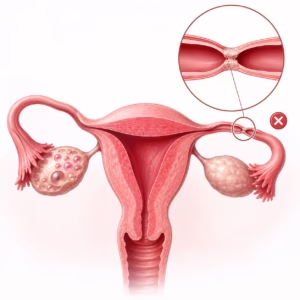
- Tubal and Endometrial Dysfunction: Nicotine alters ciliary beat frequency within the fallopian tubes, doubling the relative risk of ectopic pregnancy.
Impact on Male Fertility:
- Elevated Sperm DNA Fragmentation: Tobacco toxins generate immense reactive oxygen species (ROS) in the testes, overwhelming seminal plasma antioxidants. In men evaluated for male infertility, heavy tobacco use nearly doubles the incidence of severe sperm DNA fragmentation (DFI > 30%).
- Semen Deterioration: Clinical trials consistently link smokeless and smoked tobacco to severe oligospermia (low sperm count), asthenozoospermia (poor motility), and abnormal sperm head morphology.
Metabolic Health, BMI, and the Insulin-Androgen Axis
Body composition and metabolic health establish the baseline hormonal environment for both ovaries and testes:
Metabolic Status | Female Reproductive Consequence | Male Reproductive Consequence |
|---|---|---|
Obesity & Insulin Resistance (BMI > 25.0 – 30.0 kg/m²) | Excess adiposity drives hyperinsulinemia, stimulating ovarian theca cells to overproduce androgens. This arrests follicular maturation, worsening anovulation in PCOD and PCOS. High BMI also elevates endometrial inflammatory markers, reducing IVF implantation rates | High visceral adipose tissue contains abundant aromatase enzyme, which converts circulating testosterone into estradiol. This suppresses pituitary LH/FSH secretion, resulting in hypogonadotropic hypogonadism, low libido, and reduced spermatogenesis |
Underweight & Low Energy Availability (BMI < 18.5 kg/m²) | Suppresses hypothalamic GnRH pulsatility (functional hypothalamic amenorrhea), leading to hypoestrogenism, thin endometrial lining, and absent ovulation | Diminishes Leydig cell steroidogenesis, lowering serum testosterone and reducing seminal volume |
The Clinical Power of a 5% to 10% Shift: In overweight women with ovulatory dysfunction, clinical trials prove that losing just 5% to 10% of baseline body weight reduces hyperinsulinemia, lowers free circulating testosterone, and restores spontaneous natural ovulation in up to 50% of cases without fertility medications.
Endocrine-Disrupting Chemicals (EDCs) and Environmental Toxins
We live in an industrialized world where synthetic chemicals subtly mimic, block, or interfere with natural hormone receptors:
- Bisphenol A (BPA) & Phthalates: Found in food packaging, plastic water bottles, and canned food linings. BPA mimics estrogen, binding to estrogen receptor beta (ER-beta) in granulosa cells. High urinary BPA concentrations correlate with significantly lower oocyte retrieval numbers, reduced fertilization rates, and abnormal meiotic spindle alignment during IVF.
- Industrial & Environmental Exposures in Gujarat: In manufacturing and industrial corridors (such as Ahmedabad’s Vatva, Naroda, and Odhav belts), occupational exposure to chemical solvents, welding fumes, synthetic dyes, and airborne volatile organic compounds (VOCs) has been shown to induce testicular oxidative stress and impair sperm chromatin packaging.
- Practical Mitigation: Transition to glass or stainless steel food containers, avoid microwaving food in plasticware, and drink filtered water from BPA-free vessels.
Sleep Deprivation, Circadian Disruption, and Melatonin
Modern professional life has created a culture of chronic sleep restriction and nighttime screen exposure:
- Melatonin as a Primary Ovarian Antioxidant: Melatonin is not just a sleep hormone; it is actively concentrated in follicular fluid at levels higher than in maternal serum. It functions as a powerful direct scavenger of free radicals generated during pre-ovulatory follicular development.
- Blue Light and Night Shifts: Exposure to artificial blue light from smartphones and laptops after 10 PM suppresses pineal melatonin secretion. Studies indicate female shift workers face significantly higher rates of menstrual irregularities, delayed conception timelines, and early miscarriages due to disrupted circadian clock genes (CLOCK and BMAL1) within endometrial tissue.
- Male Sleep Architecture: Men obtaining fewer than 6 hours—or more than 9 hours—of sleep per night exhibit significantly lower total sperm counts and testosterone levels compared to men sleeping 7 to 8 hours.
Physical Activity and Scrotal Hyperthermia: Finding the Biological Balance
The Female Exercise Curve:
Moderate regular exercise (brisk walking, swimming, cycling for 30 to 45 minutes 4 to 5 times weekly) improves peripheral insulin sensitivity, enhances pelvic vascular circulation, and reduces systemic inflammatory cytokines. However, extreme endurance training (such as marathon running or daily high-intensity interval training exceeding 60 minutes) induces negative energy balance, activating the adrenal stress axis and suppressing ovulation.
Male Scrotal Thermoregulation:
Human testes are anatomically suspended outside the pelvic cavity for a vital physiological reason: spermatogenesis requires a local temperature 2.0°C to 3.0°C lower than core body temperature (34.0°C–34.5°C).
- Habits Causing Scrotal Hyperthermia: Working with a laptop directly on the lap, sitting continuously for >4 to 6 hours (desk jobs, long taxi/truck driving), frequent hot saunas, and wearing tight synthetic undergarments impair the pampiniform venous cooling mechanism.
- Elevated testicular temperature induces thermal shock protein synthesis, elevates sperm DNA fragmentation, and triggers germ cell apoptosis.
As explored in our dedicated research review on stress and infertility facts vs. myths, emotional health and physical well-being are interconnected; supporting both produces the highest clinical gains.
The 90-Day Pre-Conception Optimization Scorecard
Because human spermatogenesis requires 72 to 74 days and human pre-antral follicular development takes 85 to 90 days, lifestyle improvements require a full 3-month cycle to reflect in gamete biology:
- TOBACCO CESSATION: 100% elimination of bidis, cigarettes, gutka, and mawa for both partners.
- METABOLIC TARGETING: Aim for a BMI between 19.0 and 24.9 kg/m²; achieve a 5% to 7% reduction if currently overweight with PCOS.
- MEDITERRANEAN-STYLE DIET: High antioxidant intake (colorful veg, pulses, nuts, olive oil); eliminate commercial trans-fats.
- PLASTIC DETOX: Eliminate hot food in plastic; switch to glass/steel.
- CIRCADIAN HYGIENE: 7 to 8 hours of dark sleep; no screens in bed.
- THERMAL PROTECTION: Keep laptops off laps; take standing breaks every 60 minutes; switch to loose cotton underwear.
- TARGETED SUPPLEMENTS: CoQ10 (Ubiquinol), Vitamin D3, Active Folate.
At Wellspring IVF & Women’s Hospital – Ahmedabad Dr. Pranay Shah couples advanced cleanroom embryology with individualized pre-treatment optimization, ensuring every patient approaches their treatment cycle with peak biological readiness.
Frequently Asked Questions (FAQ)
Can past smoking or alcohol use permanently destroy my fertility if I quit today?
No. In men, sperm turnover is continuous every 74 days; quitting smoking and alcohol produces measurable improvements in sperm count, motility, and DNA fragmentation within 3 to 6 months. In women, while past smoking may have slightly accelerated follicle loss, stopping immediately halts toxic oxidative damage to the remaining follicular pool.
How much coffee or chai is safe when trying to conceive?
Medical guidelines from ASRM and NICE recommend limiting total caffeine intake to under 200 mg per day. This is approximately equivalent to 1 to 2 small cups of tea (chai) or 1 mug of brewed coffee. Higher consumption has been linked to peripheral vasoconstriction and prolonged time to pregnancy.
Does taking an occasional hot bath or using a laptop on the lap really hurt male fertility?
An isolated 10-minute warm bath will not cause permanent infertility. However, chronic, daily scrotal hyperthermia (such as resting a hot laptop directly on the lap for hours each day or sitting continuously for 8 hours without standing breaks) significantly elevates scrotal temperature, damaging developing spermatids and increasing DNA fragmentation.
Scientific Citations & References
- Practice Committee of the American Society for Reproductive Medicine. (2022). Optimizing natural fertility: a committee opinion. Fertility and Sterility, 117(1), 83–97.
- Sharma, R., et al. (2016). Lifestyle factors and reproductive health: taking control of your fertility. Reproductive Biology and Endocrinology, 14(1), 18.
- Schlegel, P. N., et al. (2021, updated 2024). Diagnosis and treatment of infertility in men: AUA/ASRM guideline. Journal of Urology, 205(1), 36–43.
- Al-Jebari, Y., et al. (2022). The impact of environmental and lifestyle factors on male reproductive health: a systematic review. Human Reproduction Update, 28(4), 512–534.