IVF Treatment in Ahmedabad - Process, Eligibility & What to Expect
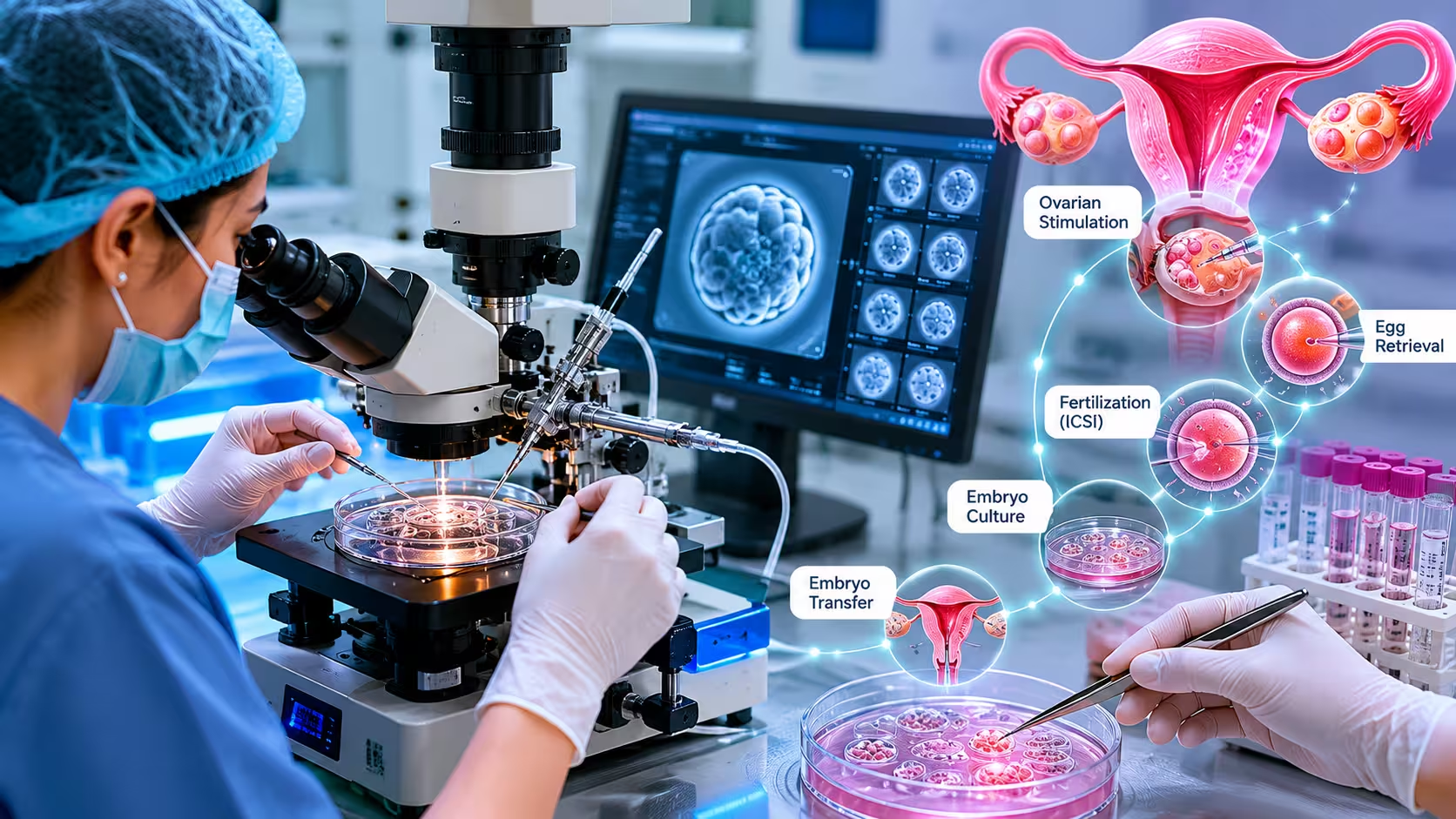
IVF (in vitro fertilisation) is a treatment in which eggs are retrieved from the ovaries, fertilised in an embryology laboratory, and the resulting embryos are transferred to the uterus. This guide explains the IVF process from initial assessment and ovarian stimulation through egg retrieval, fertilisation, embryo culture, embryo transfer and pregnancy testing.
IVF treatment is planned according to factors such as age, ovarian reserve, diagnosis, sperm parameters, previous treatment history and reproductive goals at our clinic. All controlled ovarian stimulation, egg retrieval, and blastocyst transfer procedures are performed under one roof at Wellspring IVF & Women’s Hospital — a leading IVF centre and fertility clinic in Ahmedabad (Level 2 ART Reg. No. GS/AHD/024). Every IVF cycle at our clinic is personally planned and performed by Dr. Pranay Shah, our senior IVF specialist and fertility doctor in Ahmedabad, ensuring single-doctor continuity of care. IVF is not automatically the first treatment for every couple; the appropriate approach depends on the clinical situation.
Starting IVF is one of the most significant decisions a couple will make. It deserves complete honesty — about what the process involves, what it costs, what success rate is realistic for your specific situation, and what to do if an IVF cycle fails.
This page answers everything. The complete IVF process — step by step. What IVF costs in Ahmedabad — with full transparency. What factors actually determine your success rate. And when IVF is — and is not — the right next step. If you have a question not answered here, the answer is one call away.
Request a Free Callback
What Is IVF? — In Vitro Fertilisation Explained Simply
IVF stands for In Vitro Fertilisation — ‘in vitro’ means ‘in glass’ in Latin, referring to the process happening outside the body in the embryology laboratory. In natural conception, fertilisation occurs inside the fallopian tube. In IVF, Dr. Shah’s team recreates this process with precision in our advanced lab — controlling conditions that nature cannot.
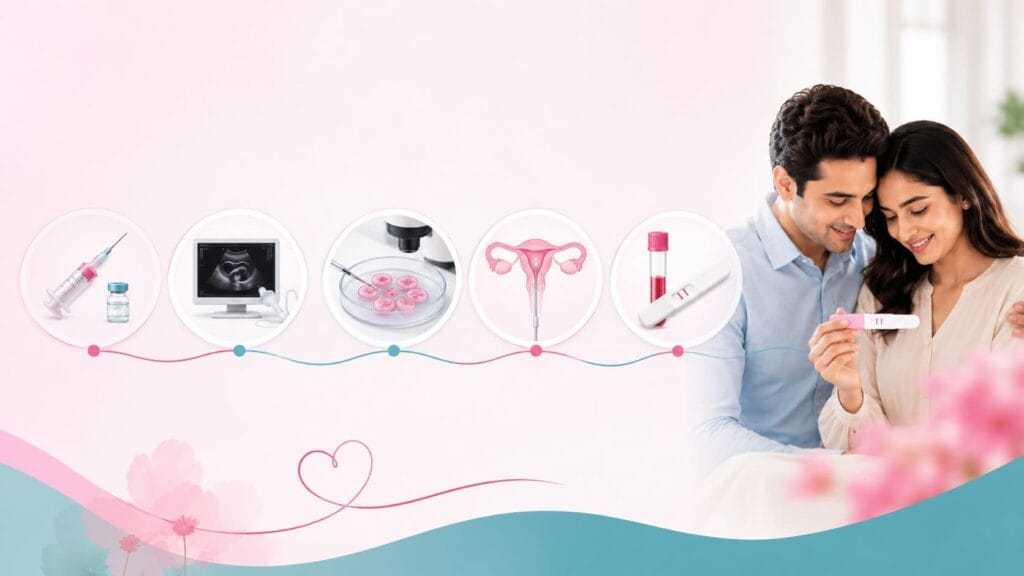
The process has five core phases: hormonal stimulation of the ovaries to produce multiple mature eggs, retrieval of those eggs under sedation, fertilisation with prepared sperm in the embryology lab, culture of the resulting embryo for 3–5 days, and transfer of the best-quality embryo to the uterus. The entire process, from stimulation to pregnancy test, takes approximately 4–6 weeks.
IVF is not a single ‘procedure’ — it is a precisely sequenced medical protocol where every decision — stimulation dose, trigger timing, sperm selection technique, transfer day, progesterone support — is individualised. The quality of these micro-decisions, made by the embryologist and the fertility consultant working in sync, is the true determinant of IVF success. This is where Wellspring IVF’s in-house team model delivers its advantage.
IVF at Wellspring — At a Glance
| Feature / Metric | Details |
|---|---|
| What Is IVF | In Vitro Fertilisation — eggs retrieved from the ovaries, fertilised with sperm in our embryology lab, and the resulting embryo transferred to the uterus. |
| Typical Treatment Duration | A fresh IVF cycle commonly spans approximately 4–6 weeks from stimulation through pregnancy testing. |
| IVF Cost Range | ₹99,999 to ₹2,50,000 per cycle (see our complete IVF cost breakdown). Cost depends on protocol complexity, medications, and add-ons required. |
| Monitoring | Follicle growth and hormone levels are monitored during ovarian stimulation. |
| Fertilisation Options | Conventional IVF or ICSI may be used depending on semen parameters and clinical circumstances. |
| Technology | Advanced IVF lab with HEPA-filtered, VOC-controlled air systems. In-house embryology team. Blastocyst culture, vitrification, ICSI, IMSI, PGT-A. |
| Embryo Culture | Embryos may be cultured to Day 3 or Day 5/6 depending on the treatment plan and embryo development. We prefer Blastocyst culture in majority of cases where medically suitable. |
| Fresh vs Frozen | Both protocols available. Dr. Shah determines the optimal strategy at consultation — not a one-size-fits-all policy. |
| Pregnancy Testing | Beta-hCG blood testing is performed after embryo transfer at the time advised by the treating team. |
The IVF Process
Initial Assessment & Baseline Scan
- Transvaginal ultrasound — antral follicle count (AFC), uterine cavity assessment
- Baseline blood tests — Day 2/3 FSH, LH, Estradiol, AMH confirmation
- Protocol finalised — stimulation dose, medication schedule, calendar dates confirmed
- Medication teaching — nurse explains injection technique (self-administration at home)
Controlled Ovarian Stimulation (COS)
- FSH or hMG-based stimulation medication is prescribed according to the individual ovarian stimulation protocol.
- GnRH antagonist added Day 5–6 to prevent premature ovulation
- Monitoring scans every 2–3 days — follicle size, count, endometrial thickness
- Blood tests — Estradiol (E2) levels guide dose adjustments in real time
- Typical response: 8–15 mature follicles at Day 10–12 for good responders. The number of follicles and mature eggs varies considerably between patients and depends on age, ovarian reserve and response to stimulation.
- Dr. Shah reviews every monitoring result personally before dose adjustment
Trigger Injection — Final Egg Maturation
- When follicular development and hormone levels indicate appropriate maturation, the final maturation trigger is administered at the timing determined by the treating team. (hCG or GnRH agonist)
- Trigger type chosen based on OHSS risk — agonist trigger for high responders
- Egg retrieval scheduled precisely 34–36 hours after trigger
- Partner’s semen sample collection date and time confirmed
Egg Retrieval (Ovum Pick-Up)
- Transvaginal ultrasound-guided follicle aspiration under IV sedation — 20–30 minutes
- Performed by Dr. Shah personally — not delegated
- Embryologist receives eggs immediately in adjacent lab for preparation
- Recovery 2–4 hours. Discharge same day. Mild cramping is normal
- Average eggs retrieved: 8–15 in good responders. Fewer in DOR patients — discussed beforehand
Sperm Preparation & Fertilisation
- Semen sample processed: density gradient + swim-up to select best sperm
- ICSI treatment (recommended in most protocols): single best-quality sperm injected into each mature egg
- Additional sperm-selection techniques may be considered in selected cases based on semen parameters, previous fertilisation outcomes and clinical assessment.
- Fertilisation confirmed Day 1 (16–18 hours after ICSI): 2-pronucleate embryos counted
- Fertilisation rate at Wellspring IVF: typically 70–80% of mature eggs
Embryo Culture — Day 1 to Day 5
- Embryos cultured in time-lapse or standard incubators — controlled temperature, pH, gas, humidity
- Daily assessment: cleavage rate, fragmentation, symmetry
- Day 3 cleavage embryo: 6–8 cells — option for Day 3 transfer in selected cases
- Day 5 blastocyst: inner cell mass + trophectoderm expansion — preferred transfer stage
- PGT-A biopsy at Day 5 if chromosomal testing is part of the plan
Embryo Transfer
- Best-quality embryo selected — Gardner grading for blastocysts (aim: 4AA–5AA)
- Soft catheter transfer under ultrasound guidance — no sedation needed, no pain
- Single embryo transfer (eSET) is preferred to avoid twin risk
- Luteal support begins: progesterone pessaries/gel (Crinone/Utrogestan) + oestrogen
- Remaining good-quality embryos vitrified (frozen) for future FET cycles
- Rest for 30 minutes post-transfer. Return to light activity same evening
Pregnancy Test — Beta-hCG
- Blood beta-hCG tested 14 days after transfer — the only reliable pregnancy confirmation
- Positive result: progesterone support continued, first ultrasound at 6–7 weeks
- Negative result: Dr. Shah consultation — review cycle, adjust protocol, plan next steps
- Frozen embryos available for FET cycle — no repeat stimulation needed
- Dr. Shah available by WhatsApp for questions during the 2-week wait
Want a detailed breakdown of what happens on every single day of your cycle? Read the complete IVF timeline, day by day to prepare for your treatment journey.
Fresh IVF Cycle vs Frozen Embryo Transfer (FET) — What Is the Difference?
One of the most common questions at consultation. The honest answer: it depends on your situation. Dr. Shah does not have a blanket policy — he has a clinical framework:
Factor | Fresh IVF Cycle | Frozen Embryo Transfer (FET) |
|---|---|---|
Embryo used | Created and transferred in same stimulation cycle | Embryo created earlier, frozen, thawed and transferred in a separate cycle |
Endometrium | Stimulated (may not be optimal — raised progesterone can reduce receptivity) | Natural or medicated — endometrium fully prepared without stimulation interference |
OHSS risk | Higher — especially in high responders | None — stimulation already completed |
Best for | Good responders with normal progesterone on trigger day, 2–3 embryos only | High responders, OHSS risk, PGT-A cases, elevated progesterone at trigger, low-AMH freeze-all strategies |
Success rates | Outcomes depend on patient characteristics, embryo quality, endometrial preparation and the reason a fresh or frozen transfer is selected. Neither approach is universally superior for every patient. | Equivalent or better in most patient groups — particularly for PGT-A cycles |
Dr. Shah’s default | Fresh or frozen transfer is selected case by case based on ovarian response, hormone levels, embryo status, endometrial factors and whether embryo testing is planned. | Preferred for high responders and whenever progesterone rise >1.5 ng/mL on trigger day |
Read full guide |
|
Watch Our IVF Treatment Video
Learn how IVF treatment works, when it may be recommended, and what couples can expect during the process.
What You Will Learn
- IVF process step-by-step
- Embryo transfer and IVF treatment basics
- IVF success factors and common myths
- When IVF may be recommended
IVF Cost: What Determines the Treatment Price?
compare Basic, Standard, and Advanced tiers in our IVF treatment cost and package guide for Ahmedabad. →
What Our Patients Say


A special thank you to Dr. Pranay Shah for his confidence, guidance, and the way he explained everything so patiently. His positive approach gave me so much strength, and today I am blessed with my baby.
Thank you to each and every member of the hospital for taking such great care of me and supporting me throughout this journey. Forever grateful. 💕

He is, without a doubt, the most patient doctor I have ever met. Of course, treatment can be done by many. What truly sets him apart is his maturity, the way he pauses, explains, comforts, and most importantly, seeks your permission before moving forward. You never feel rushed. You never feel unheard. You feel respected.
And the staff deserves equal appreciation. They handle even the most anxious and impatient moments with such calm grace and dignity that you slowly find your own heartbeat settling down. It feels less like a clinic and more like a safe space.
I wholeheartedly recommend him to anyone who overthinks, seeks reassurance, or simply needs a doctor who believes comfort is the first step of healing. With him, care begins long before the treatment does.

Highly recommend for their expertise, kindness and dedication. "Turned out dream into reality"



Our gratitude also extends to everyone in your clinic who offered a smile, reassurance, technical support, or a listening ear along the way. We feel incredibly blessed to have chosen your practice for our journey, and we will always cherish the precious gift you helped us receive.
Thank you, from the bottom of our hearts, for making our dream a reality.
800+ Positive Google Reviews
Speak With Our IVF Team
IVF Success Rates at Wellspring IVF — What Actually Determines Your Chances?
Wellspring reports a 70%+ positive pregnancy outcome in a defined cohort of 500 women aged 25–35 who underwent transfer of a 4AA-grade blastocyst between January and November 2025. This figure represents that specific cohort and should not be interpreted as an overall IVF success rate across all patients or all treatment cycles. Individual outcomes vary according to age, ovarian reserve, diagnosis, sperm factors, embryo characteristics and other clinical factors.
Factor | Impact on Success Rate | Wellspring IVF Approach |
|---|---|---|
Female Age | Most powerful predictor. Under 35: 65–75%. 35–37: 55–65%. 38–40: 35–50%. Over 40: 20–35% (own eggs) | Age-matched protocol. PGT-A offered for 38+ to select chromosomally normal embryos (learn how PGT-A improves IVF success). |
Ovarian Reserve (AMH) | Low AMH reduces egg yield but does not preclude IVF. Quality matters more than quantity | Dr. Shah has a specific Low AMH IVF protocol. See: Low Ovarian Reserve guide by Dr.Pranay Shah |
Uterine Cavity | Submucosal fibroids, polyps, septum, adhesions — all reduce implantation. Correctable | Hysteroscopy performed before IVF if cavity assessment shows any abnormality |
Sperm Quality (DFI) | High DNA fragmentation reduces embryo quality and increases miscarriage risk despite good SA | DFI tested routinely in unexplained infertility + RPL. PICSI/TESE when elevated |
Embryo Quality | Blastocyst quality (Gardner grade) is the strongest single predictor of implantation | Blastocyst culture standard. Day 5 transfer unless clinical indication for Day 3 |
Endometrial Receptivity | Thin endometrium (<7mm) or poor trilaminar pattern reduces implantation | ERA (Endometrial Receptivity Analysis) offered for recurrent implantation failure |
Number of Embryos | More embryos = more transfer attempts. First cycle matters, but frozen embryos enable 2nd/3rd FET | Vitrification standard for all surplus good-quality embryos |
Lifestyle Factors | Smoking reduces IVF success by 15–20%. BMI >30: reduced response | Pre-IVF lifestyle counselling. 90-day optimisation period recommended where timeline permits |
A Note on Success Rate Claims:
Any clinic that quotes a single success rate number without qualification is presenting incomplete information. Key questions to ask: Is this per egg retrieval, per embryo transfer, or per couple? Does it include cancelled cycles? What age group does it reflect? What denominator is used? At Wellspring IVF, Dr. Shah provides your individualised probability at consultation — based on your specific age, AMH, diagnosis, and sperm parameters. That number is more useful than any clinic average.
When several embryo transfer procedures have not resulted in a pregnancy, the situation is reviewed as recurrent implantation failure before the same protocol is simply repeated
IVF Protocol Deep Dives — Choose Your Specific Treatment Guide
Fresh IVF Cycle — Complete Guide
- Full stimulation calendar — Day 1 to transfer
- How Dr. Shah individualises stimulation dose and protocol type (long, short, antagonist)
- What to expect during egg retrieval and the 2-week wait
- Fresh transfer vs freeze-all decision — when Dr. Shah chooses each
- Medications list — what you will be injecting and why
Frozen Embryo Transfer (FET) — Complete Guide
- Natural cycle FET vs medicated cycle — which is right for you
- Endometrial preparation protocol — oestrogen and progesterone timing
- Embryo thawing and quality assessment — the vitrification survival rate
- The transfer procedure — softer, simpler, with no anaesthesia
- FET success rates vs fresh cycle — the evidence clearly explained
Clinical Decision Note: Dr. Pranay Shah evaluates your hormone profile, trigger day progesterone, and OHSS risk before choosing your transfer type. Read our detailed clinical guide on when a fresh transfer beats a freeze-all (and vice-versa) to explore specific patient scenarios.
Your Fertility Consultant
IVF treatment at Wellspring is led by Dr. Pranay Shah, Director & Chief Fertility Consultant, with continuity of care across treatment planning, monitoring and follow-up. Dr. Pranay Shah’s profile →
Dr. Pranay Shah
Divyesh Bhalodia
Urmi Chauhan
When Is IVF the Right Treatment? — Dr. Shah's Decision Framework
Clear Indications for IVF
- Blocked or damaged fallopian tubes: Both tubes blocked: IVF is the primary treatment — sperm cannot reach the egg naturally. One tube blocked with additional factors: IVF strongly preferred over IUI. Guide: Blocked Fallopian Tubes
- Severe male factor infertility: Severe oligospermia, severe asthenospermia, azoospermia (with surgical sperm retrieval), high DFI — all direct IVF/ICSI indications where IUI is not adequate. Guide: Male Infertility Hub
- Failed IUI (3+ cycles): After 3 failed IUI cycles with no explanatory cause found: escalate to IVF. Each additional IUI cycle beyond 3 has diminishing returns and unnecessarily delays the more effective treatment.
- Severe endometriosis or adenomyosis: Advanced endometriosis affecting tubal function or ovarian reserve. Adenomyosis with recurrent implantation failure. IVF with possible FET + endometrial preparation.
- Recurrent pregnancy loss with chromosomal cause: IVF with PGT-A to transfer only chromosomally normal embryos — the most effective treatment for chromosomally-driven RPL. Guide: Recurrent Miscarriage
- Age-related fertility decline (35+): Women over 35 with 6+ months of unsuccessful attempts, or over 40 with any fertility concern: IVF gives the highest probability of pregnancy within the available time. IUI delays are not appropriate.
- Unexplained infertility after thorough workup: If all investigations are normal and IUI has not succeeded: IVF allows observation of fertilisation and embryo development — which often reveals the cause (poor blastulation, high DFI) that was invisible to any pre-IVF test.
When Another Fertility Treatment May Be More Appropriate
IVF is not the first treatment for every patient. Depending on the diagnosis, options such as ovulation induction or IUI may be considered before IVF. The choice should be based on the couple’s clinical findings and treatment history.
Explore IUI treatment guide.
What Supports IVF Care at Wellspring
In-house embryology team
At many IVF centres, the embryology lab is outsourced or shared. At our IVF Centre in Ahmedabad, our in-house embryology team works alongside the fertility consultant throughout fertilisation, embryo culture, assessment and cryopreservation.
Advanced IVF lab
Embryo culture is performed in a controlled laboratory environment with monitored temperature, gas and air-quality parameters.
Individualised treatment planning
Stimulation and transfer decisions are adapted to the patient’s age, ovarian reserve, diagnosis, response and treatment history. Wellspring treats couples from across the state — see all the areas we serve across Ahmedabad and Gujarat and how out-of-town treatment works.
Clear treatment and cost communication
Patients are informed about the rationale for recommended procedures, expected steps and relevant costs before treatment decisions are made.
“Every couple that comes to Wellspring IVF gets three things from me at the first meeting: a complete, honest assessment of their situation — no softening of difficult truths; a personalised treatment plan with a genuine rationale for every recommendation; and a full cost breakdown before they commit to anything. IVF is expensive. It is also emotionally demanding. The least I can do is make sure no couple is surprised — by a bill, by a protocol change, or by a result they were never prepared for. Transparency is not a feature of our practice. It is the foundation of it.”
— Dr. Pranay Shah, MS (ObGy), Director & Chief Fertility Consultant, Wellspring IVF & Women’s Hospital, Ahmedabad
Frequently Asked Questions
What lifestyle or dietary changes does Dr. Shah recommend before starting an IVF cycle to maximize success rates?
Because egg and sperm quality develop over approximately a 90-day window, Dr. Shah at Wellspring IVF & Women’s Hospital recommends a pre-IVF optimisation period where possible. Key clinical recommendations include eliminating smoking and limiting alcohol (which significantly reduce fertilization and implantation success), managing daily stress, maintaining a healthy BMI, and taking targeted supplements such as CoQ10, Vitamin D, and folic acid as prescribed during your initial consultation. Pre-IVF lifestyle counseling is built into your baseline planning.
What is the IVF success rate at Wellspring IVF?
Wellspring reports a 70%+ positive pregnancy outcome in a defined cohort of 500 women aged 25–35 who underwent transfer of a 4AA-grade blastocyst between January and November 2025. This figure represents that specific cohort and should not be interpreted as an overall IVF success rate across all patients or all treatment cycles. Individual outcomes vary according to age, ovarian reserve, diagnosis, sperm factors, embryo characteristics and other clinical factors.
How many IVF cycles will I need?
Most international IVF programmes plan for up to 3 cycles as the standard treatment course — because cumulative success rates over 3 cycles are significantly higher than any single cycle. However, many couples succeed in the first cycle — particularly under 35 with good ovarian reserve. Having frozen embryos from the first stimulation cycle reduces the cost and physical burden of additional attempts. Dr. Shah reviews every cycle individually and adjusts the protocol for the next attempt based on what was observed.
I live outside Ahmedabad. How many hospital visits are required during one IVF cycle, and how long do I need to stay in the city?
For out-of-town patients, a complete IVF cycle typically requires 5 to 7 visits spread over 4 to 6 weeks, or an unbroken stay of about 10 to 14 days starting from baseline stimulation monitoring through the egg retrieval and embryo transfer procedures. Initial baseline scans and early monitoring can often be done locally with our remote guidance, minimizing time away from home. Dr. Shah’s team coordinates your calendar precisely in advance so you can plan travel without guesswork.
What is the difference between IVF and ICSI?
IVF (In Vitro Fertilisation) is the overall process — egg retrieval, fertilisation in the lab, embryo culture, and transfer. ICSI (Intracytoplasmic Sperm Injection) is the fertilisation technique — instead of placing many sperm near the egg (conventional IVF insemination), the embryologist selects a single best-quality sperm and injects it directly into the egg. ICSI is a component of IVF, not an alternative to it. It is recommended when any male factor is present, and increasingly as a default in most modern IVF protocols. For a detailed itemised list of what is included in IVF or ICSI package, view our full IVF cost breakdown by cycle type.
Can I do IVF if I have low AMH or poor ovarian reserve?
Yes — low AMH means fewer eggs are available, but success is possible. Dr. Shah has a dedicated protocol for low AMH patients: modified stimulation dosing, precise trigger timing, and blastocyst culture to select the best from a smaller cohort. IVF success with low AMH depends primarily on egg quality — which is related to age more than AMH. A 33-year-old with low AMH who produces 3 eggs has a much better chance than a 42-year-old who produces 8. Full guide: Low AMH Treatment
What is the process for IVF with donor eggs at Wellspring IVF?
Donor egg IVF (using oocytes from another woman) is available at Wellspring IVF for women with very poor ovarian reserve, premature ovarian failure, or advanced age where own-egg IVF is unlikely to succeed. Under the ART (Regulation) Act 2021, egg donation in India is strictly voluntary — no payment or reward is made to donors. Donor oocytes are provided through a licensed ART Bank. ART Bank service/processing charges apply — these are the bank’s regulatory and facilitation costs, not donor payments. All charges are disclosed in full before treatment begins. Dr. Shah discusses donor egg IVF candidacy at consultation — it is never assumed or recommended without a full own-egg assessment first.
How long does one IVF cycle take from start to pregnancy test?
Approximately 4 to 6 weeks for a complete fresh IVF cycle. The stimulation phase takes 10–14 days. Egg retrieval occurs on approximately Day 14. Embryo culture to blastocyst: Days 14–19. Embryo transfer: approximately Day 19–20. Beta-hCG pregnancy blood test: 14 days after transfer (Day 31–34 overall). If a frozen embryo transfer (FET) is planned instead of fresh transfer, an additional 3–4 weeks for endometrial preparation is needed.
Related Conditions & Treatments
Related Insights & Articles
 Medically Reviewed & Authored by Dr. Pranay Shah (MS Obs & Gyn, FICOG), Medical Director & Senior Infertility Specialist at…June 11, 2026
 Published: Jun 11, 2026| Medically reviewed by: Dr. Pranay Shah, MS (Obs. & Gyn.), GMC Reg. No. G-18311 — Founder,…June 11, 2026
 Most patients starting their first IVF cycle describe the same feeling: overwhelmed by a process they do not fully understand,…June 5, 2026
Begin Your IVF Treatment in Ahmedabad at Wellspring IVF
Dr. Pranay Shah's team is available 6 days a week. WhatsApp enquiries answered within the working day. First consultation is a conversation — not a commitment.