

What Is PGT-A and How Does It Enhance IVF Success?
Direct Answer
PGT-A (Preimplantation Genetic Testing for Aneuploidy) is an advanced IVF technique used to evaluate embryos for chromosomal abnormalities before embryo transfer. By identifying embryos with the correct number of chromosomes, PGT-A may improve embryo selection, reduce miscarriage risk in selected patients, and increase the likelihood of transferring a chromosomally normal embryo. However, PGT-A does not guarantee pregnancy and is not necessary for every IVF patient.
Key Facts Table
| Topic | Information |
|---|---|
| Treatment | PGT-A |
| Full Form | Preimplantation Genetic Testing for Aneuploidy |
| Performed During | IVF |
| Purpose | Chromosome Screening |
| Requires Embryo Biopsy | Yes |
| Usually Performed On | Blastocysts |
| Helps Select Embryos | Yes |
| Detects Chromosomal Abnormalities | Yes |
| Guarantees Pregnancy | No |
| Used With | IVF, ICSI, Embryo Freezing |
Introduction
One of the biggest challenges in fertility treatment is that not every embryo has the same chance of developing into a healthy pregnancy.
Even embryos that appear excellent under the microscope may carry chromosomal abnormalities that prevent implantation, cause miscarriage, or result in failed IVF cycles.
Advances in reproductive genetics have transformed the way fertility specialists evaluate embryos. One of the most important developments has been PGT-A, a technique that allows embryos to be screened for chromosome abnormalities before transfer.
Many patients hear terms such as “genetic testing,” “chromosome screening,” or “PGT-A” during IVF consultations but remain unsure about what these procedures actually involve.
At Wellspring IVF & Women’s Hospital, Ahmedabad, we believe patients should fully understand the benefits, limitations, and appropriate use of PGT-A before making treatment decisions.
If you are new to fertility treatment, you may first want to understand the basics of IVF Treatment and how embryos are created during the IVF process. If you’re weighing genetic testing, PGT-A testing at Wellspring is advised selectively by Dr. Shah — here’s who benefits and who doesn’t.
What Is PGT-A?
PGT-A stands for Preimplantation Genetic Testing for Aneuploidy.
It is a specialized laboratory procedure used during IVF to examine embryos for chromosomal abnormalities before transfer into the uterus.
Humans normally have 46 chromosomes arranged in 23 pairs.
When an embryo has too many or too few chromosomes, it is called aneuploid.
Examples include:
- Extra chromosomes
- Missing chromosomes
- Major chromosomal abnormalities
Many chromosomally abnormal embryos:
- Fail to implant
- Stop developing
- Result in miscarriage
- Lead to unsuccessful IVF cycles
PGT-A helps identify embryos that appear chromosomally normal before transfer.
Why Chromosomes Matter in IVF
Every embryo receives genetic material from both the egg and sperm.
The correct chromosome number is essential for normal embryo development.
Chromosomal abnormalities become more common as maternal age increases.
This is one reason why fertility declines with age and miscarriage rates increase over time.
Even healthy-looking embryos may carry chromosomal abnormalities that cannot be detected through routine embryo grading alone.
This is why PGT-A and embryo grading serve different purposes.
Embryo grading evaluates appearance.
PGT-A evaluates chromosomes.
How Is PGT-A Different From Embryo Grading?
Many patients mistakenly believe embryo grading and genetic testing are the same thing.
They are not.
| Embryo Grading | PGT-A |
|---|---|
| Evaluates appearance | Evaluates chromosomes |
| Morphology based | Genetics based |
| Non-invasive | Requires biopsy |
| Helps rank embryos | Helps identify chromosomal status |
| Cannot detect aneuploidy | Detects many chromosomal abnormalities |
For patients interested in embryo development, our guide on Blastocyst Culture explains how embryos reach the stage where PGT-A can be performed.
Who May Benefit From PGT-A?
PGT-A is not recommended for every patient.
However, it may be considered in certain situations.
Advanced Maternal Age
Chromosomal abnormalities increase significantly with age.
Women over 35 may be more likely to consider PGT-A.
Recurrent Miscarriage
Repeated pregnancy loss may sometimes be associated with chromosomal abnormalities.
Recurrent IVF Failure
Patients who have experienced multiple unsuccessful IVF cycles may benefit from additional embryo assessment.
Multiple Embryos Available
PGT-A may assist embryo selection when several embryos are available.
Previous Chromosomal Abnormality
Couples with a history of chromosomal issues may require additional genetic evaluation.
Elective Single Embryo Transfer
PGT-A may support the selection of a single embryo for transfer.
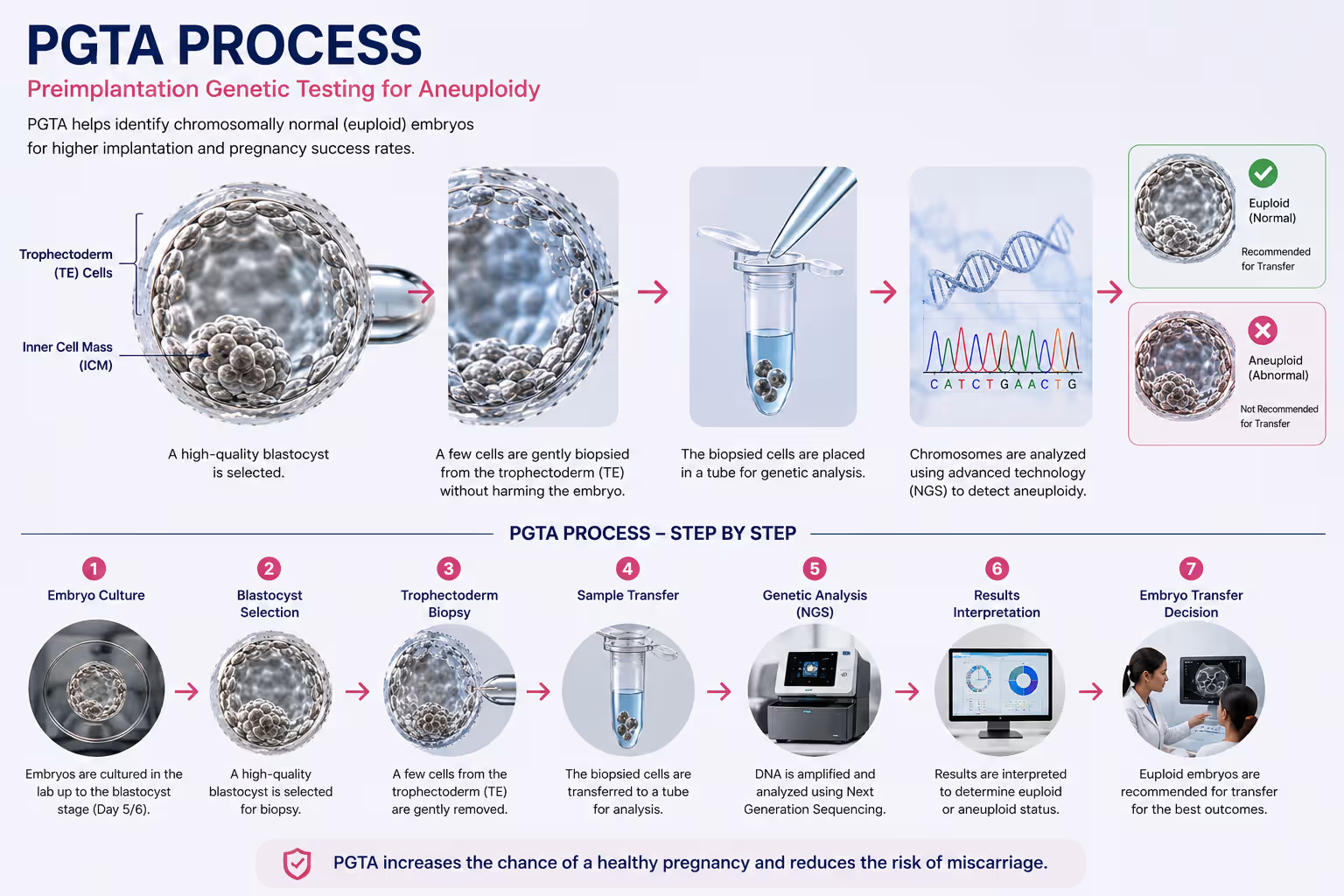
Step-by-Step PGT-A Process
Step 1: IVF Cycle
The process begins with IVF Treatment.
Eggs are retrieved and fertilized in the laboratory.
Step 2: Fertilization
Fertilization often occurs using ICSI Treatment because it reduces the possibility of contamination during genetic testing.
Step 3: Embryo Development
Embryos are cultured for approximately five to six days until they reach the blastocyst stage.
Step 4: Embryo Biopsy
A small number of cells are removed from the trophectoderm portion of the embryo.
These cells eventually form the placenta.
The cells that become the fetus are generally not sampled.
Step 5: Genetic Analysis
The biopsy sample is sent for genetic testing.
Chromosomal analysis is performed.
Step 6: Embryo Freezing
Most embryos are frozen while awaiting results.
Step 7: Embryo Transfer
A selected embryo is transferred during a future cycle.
What Results Can PGT-A Provide?
PGT-A results generally categorize embryos into three groups:
Euploid Embryos
Chromosomally normal.
These embryos are generally preferred for transfer.
Aneuploid Embryos
Chromosomally abnormal.
These embryos are generally not recommended for transfer.
Mosaic Embryos
Contain a mixture of normal and abnormal cells.
Management depends on individual circumstances and specialist recommendations.
Does PGT-A Improve IVF Success?
This is one of the most important questions patients ask.
The answer is nuanced.
PGT-A does not create better embryos.
PGT-A helps identify embryos that may have a higher likelihood of successful implantation.
Potential benefits include:
- Better embryo selection
- Fewer failed transfers
- Lower miscarriage risk in selected patients
- Improved efficiency of IVF treatment
- Greater confidence during embryo transfer decisions
Success Factors That Influence PGT-A Outcomes
While PGT-A can be a valuable tool, successful outcomes depend on multiple factors beyond genetic testing alone.
Female Age
Age remains one of the most important predictors of fertility success.
As women age:
- Chromosomal abnormalities become more common
- Egg quality declines
- IVF success rates may decrease
Although PGT-A may help identify chromosomally normal embryos, it cannot reverse age-related fertility decline.
Egg Quality
PGT-A evaluates chromosomes but does not directly improve egg quality.
Healthy eggs remain essential for embryo development.
Sperm Quality
Male fertility factors continue to play an important role.
In cases of severe male-factor infertility, advanced procedures such as ICSI Treatment or IMSI Treatment may be recommended to optimize fertilization.
Embryology Laboratory Quality
The expertise of the embryology team and laboratory standards significantly influence outcomes.
Factors include:
- Culture systems
- Incubation technology
- Biopsy expertise
- Embryo freezing protocols
Uterine Receptivity
Even a chromosomally normal embryo requires a receptive uterine environment for implantation.
Conditions affecting implantation may include:
- Endometrial abnormalities
- Polyps
- Fibroids
- Adenomyosis
- Chronic endometritis
Risks of PGT-A
PGT-A is generally considered safe when performed by experienced embryologists.
However, patients should understand potential limitations and risks.
Embryo Biopsy Procedure
A small number of cells are removed from the embryo.
Although modern techniques are highly refined, biopsy remains an invasive laboratory procedure.
No Absolute Guarantee
A chromosomally normal embryo does not guarantee pregnancy.
Implantation depends on many biological factors.
Mosaic Results
Some embryos demonstrate both normal and abnormal cell populations.
Interpreting mosaic embryos can be complex.
Additional Cost
PGT-A increases overall IVF treatment costs because of genetic testing and associated laboratory procedures.
Advantages of PGT-A
Improved Embryo Selection
One of the primary advantages is the ability to identify chromosomally normal embryos.
Reduced Miscarriage Risk
In selected patients, transferring a euploid embryo may reduce miscarriage risk.
Better Transfer Planning
PGT-A can assist fertility specialists when choosing among multiple embryos.
Fewer Failed Transfers
Selecting a chromosomally normal embryo may reduce the likelihood of transferring embryos that would not implant.
Supports Single Embryo Transfer
By increasing confidence in embryo selection, PGT-A may facilitate elective single embryo transfer strategies.
Limitations of PGT-A
Patients should understand that PGT-A is a powerful tool but not a perfect one.
Does Not Improve Embryos
PGT-A does not create healthier embryos.
It only provides additional information about existing embryos.
Not Every Embryo Reaches Testing
Some embryos stop developing before reaching the blastocyst stage.
Not Required for Every Patient
Many patients achieve successful pregnancies without PGT-A.
Cannot Detect Every Genetic Condition
PGT-A focuses primarily on chromosome number abnormalities.
It is not designed to identify all inherited genetic disorders.
Pregnancy Still Depends on Multiple Factors
Successful outcomes require:
- Healthy embryos
- Healthy uterus
- Appropriate timing
- Good overall reproductive health
PGT-A Success Rates
Many patients ask:
“Does PGT-A increase IVF success rates?”
The answer depends on the specific patient population.
Research suggests PGT-A may help:
- Improve embryo selection
- Reduce transfer of chromosomally abnormal embryos
- Reduce miscarriage risk in selected patients
- Improve efficiency per embryo transfer
However, success rates vary depending on:
- Female age
- Ovarian reserve
- Embryo quality
- Underlying fertility diagnosis
- Laboratory standards
The most important point is that PGT-A helps identify embryos with higher implantation potential rather than directly increasing embryo quality.
How to Improve PGT-A Outcomes
Seek Early Fertility Evaluation
Early assessment often provides more reproductive options.
Optimize Overall Health
Healthy lifestyle habits may support reproductive outcomes.
Maintain Healthy Weight
Weight optimization may improve fertility treatment response.
Follow Treatment Protocols Carefully
Medication timing and monitoring are important.
Choose an Experienced Fertility Centre
Embryology expertise significantly influences outcomes.
Patients considering advanced fertility treatment can explore our comprehensive Treatment Hub for additional information.
Clinical Insight From Dr. Pranay Shah
One of the most common misconceptions I encounter is that PGT-A guarantees pregnancy.
It does not.
What PGT-A does exceptionally well is provide valuable information about embryo chromosomes. This information can help us make more informed embryo transfer decisions.
In my experience, PGT-A is particularly useful for selected patients such as women of advanced maternal age, couples with recurrent miscarriage, and patients who have experienced repeated IVF failure.
At the same time, many younger patients with excellent prognosis achieve successful pregnancies without PGT-A. This is why fertility treatment should always be individualized rather than applying a single strategy to every patient.
The best outcomes occur when genetic testing, embryology expertise, uterine evaluation, and personalized treatment planning work together.
Patients interested in individualized fertility care can learn more about Dr. Pranay Shah and our fertility services in Ahmedabad.
Common Myths About PGT-A
Myth 1: PGT-A Guarantees Pregnancy
Reality:
Even chromosomally normal embryos may fail to implant.
Myth 2: Every IVF Patient Needs PGT-A
Reality:
Many patients achieve successful outcomes without genetic testing.
Myth 3: PGT-A Improves Egg Quality
Reality:
PGT-A evaluates embryos; it does not improve egg quality.
Myth 4: Embryo Grading and PGT-A Are the Same
Reality:
Embryo grading evaluates appearance, while PGT-A evaluates chromosomes.
Myth 5: PGT-A Eliminates All Genetic Risks
Reality:
PGT-A screens for chromosome abnormalities but does not detect every possible genetic condition.
Recent Advances in PGT-A
Reproductive genetics continues to evolve rapidly.
Recent advances include:
- Improved next-generation sequencing technologies
- Enhanced embryo biopsy techniques
- Better interpretation of mosaic embryos
- More sophisticated genetic analysis
- Integration with advanced embryo selection methods
These developments continue to improve our understanding of embryo development and reproductive genetics.
Frequently Asked Questions
What does PGT-A stand for?
PGT-A stands for Preimplantation Genetic Testing for Aneuploidy. It is used to assess embryos for chromosome abnormalities before transfer.
Is PGT-A the same as PGS?
PGS (Preimplantation Genetic Screening) is an older term. Today, the preferred terminology is PGT-A.
Does PGT-A guarantee IVF success?
No. PGT-A helps identify chromosomally normal embryos but cannot guarantee pregnancy.
Who should consider PGT-A?
Women of advanced maternal age, patients with recurrent miscarriage, recurrent IVF failure, or multiple embryos available for selection may benefit.
Is embryo biopsy safe?
When performed by experienced embryologists, embryo biopsy is generally considered safe and widely practiced.
Does PGT-A detect Down syndrome?
PGT-A can identify chromosome abnormalities associated with conditions such as Down syndrome.
Are all embryos suitable for PGT-A?
No. Embryos must usually reach the blastocyst stage before biopsy.
Can abnormal embryos self-correct?
Some embryos demonstrate mosaicism, but interpretation requires specialized expertise.
What is a euploid embryo?
A euploid embryo has the expected number of chromosomes and is generally preferred for transfer.
What is an aneuploid embryo?
An aneuploid embryo contains an abnormal number of chromosomes.
Does PGT-A improve implantation rates?
It may improve embryo selection and implantation outcomes in selected patients.
Is PGT-A useful for younger women?
It may be beneficial in specific situations, although it is not required for every younger patient.
Why is ICSI often used with PGT-A?
ICSI Treatment helps reduce contamination risks during genetic testing.
Are embryos frozen after PGT-A?
Most embryos are frozen while awaiting genetic results.
Where can I learn more about fertility treatment options?
Patients can explore IVF Treatment, IUI Treatment, and additional fertility education through our Fertility Videos.
Key Takeaways
- PGT-A evaluates embryos for chromosome abnormalities before transfer.
- It is performed during IVF treatment.
- PGT-A helps identify chromosomally normal embryos.
- It may reduce miscarriage risk in selected patients.
- It does not guarantee pregnancy.
- Embryo grading and PGT-A evaluate different aspects of embryo quality.
- Not every IVF patient requires PGT-A.
- Treatment decisions should always be individualized.
Conclusion
PGT-A has become one of the most important advances in modern reproductive medicine. By providing information about embryo chromosome status, it helps fertility specialists make more informed embryo transfer decisions and may improve treatment efficiency in selected patients.
However, PGT-A is not a universal solution and should not be viewed as a guarantee of success. Fertility outcomes continue to depend on multiple factors including age, egg quality, sperm quality, uterine health, and embryology laboratory expertise.
For couples considering advanced fertility treatment, understanding both the benefits and limitations of PGT-A is essential. A personalized consultation with an experienced fertility specialist remains the best way to determine whether PGT-A is appropriate for your specific situation.
For additional fertility education, visit our Treatment Hub, explore our Fertility Videos, or browse the latest resources in our Blog Centre.
About Dr. Pranay Shah
Dr. Pranay Shah is the Director and Chief Fertility Consultant at Wellspring IVF & Women’s Hospital, Ahmedabad. With more than 15 years of experience and over 6000 IVF success stories, he specializes in IVF, ICSI, IMSI, recurrent IVF failure, low AMH, fertility preservation, reproductive genetics, and complex infertility management.
Medical Disclaimer
This article is intended for educational and informational purposes only and should not be considered medical advice, diagnosis, or treatment. Fertility recommendations vary between individuals. Please consult a qualified fertility specialist for personalized evaluation and treatment guidance.