
Fresh vs Frozen Embryo Transfer in IVF: Which One Works Better?
Direct Answer
Neither fresh nor frozen embryo transfer is universally better for every patient. The most appropriate approach depends on factors such as age, ovarian response, embryo quality, uterine conditions, hormonal levels, and overall fertility history. Frozen embryo transfer (FET) has become increasingly popular because it allows the uterine environment to recover from ovarian stimulation and enables advanced procedures such as PGT-A Testing. However, fresh embryo transfer remains an excellent option for selected patients and continues to result in many successful pregnancies.
Key Facts Table
| Topic | Fresh Transfer | Frozen Transfer |
|---|---|---|
| Timing | Same IVF Cycle | Later Cycle |
| Embryo Freezing Required | No | Yes |
| Uterine Recovery Time | Limited | Available |
| PGT-A Compatible | Usually No | Yes |
| Additional Waiting Period | No | Yes |
| Common Modern Approach | Less Frequent | More Frequent |
| Pregnancy Possible | Yes | Yes |
| Individualized Decision | Yes | Yes |
Introduction
One of the most common questions IVF patients ask is:
“Should I choose a fresh embryo transfer or a frozen embryo transfer?”
Years ago, fresh embryo transfers were the standard approach in IVF treatment. Embryos were typically transferred a few days after egg retrieval during the same treatment cycle.
Today, advances in embryo freezing technology have dramatically changed fertility treatment. Modern vitrification techniques allow embryos to survive freezing and thawing with excellent survival rates, making frozen embryo transfer an increasingly common strategy.
As a result, many patients are surprised when they learn that fertility specialists do not automatically transfer embryos immediately after egg retrieval.
Instead, a personalized decision is made based on the patient’s fertility profile, embryo development, hormonal environment, and treatment goals.
Understanding the differences between fresh and frozen embryo transfer can help patients make informed decisions and feel more confident about their IVF journey.
Before discussing embryo transfer options, it is useful to understand the basics of IVF Treatment and how embryos are created in the IVF laboratory.
What Is a Fresh Embryo Transfer?
A fresh embryo transfer occurs during the same IVF cycle in which eggs are retrieved.
The typical process includes:
- Ovarian stimulation
- Egg retrieval
- Fertilization
- Embryo development
- Embryo transfer
The embryo is transferred into the uterus without being frozen.
Most fresh transfers occur:
- On Day 3
- On Day 5 (blastocyst stage)
Fresh transfers were historically the standard IVF approach before advanced embryo freezing techniques became widely available.
What Is a Frozen Embryo Transfer (FET)?
A frozen embryo transfer occurs after embryos have been cryopreserved and later thawed for transfer.
The process involves:
- IVF cycle
- Embryo development
- Embryo freezing
- Endometrial preparation
- Embryo thawing
- Embryo transfer
Modern freezing techniques known as vitrification have significantly improved embryo survival rates.
Today, many fertility clinics routinely freeze embryos and transfer them during a future cycle.
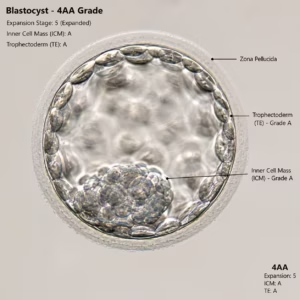
Patients interested in embryo development may also find our guide on Blastocyst Culture of Embryos.
Why Has Frozen Embryo Transfer Become So Popular?
Several advances have contributed to the growing popularity of frozen embryo transfer.
Improved Embryo Freezing Technology
Modern vitrification has dramatically improved embryo survival after thawing.
Better Endometrial Preparation
The uterine lining may be more physiologically receptive in some frozen transfer cycles.
Reduced Risk of OHSS
Patients at risk for ovarian hyperstimulation syndrome may benefit from delaying embryo transfer.
Compatibility With PGT-A
Embryos undergoing PGT-A Testing are typically frozen while awaiting results.
More Flexibility
Frozen cycles allow fertility specialists to optimize transfer timing.
Step-by-Step Fresh Embryo Transfer Process
Step 1: Ovarian Stimulation
Hormonal medications stimulate multiple follicles.
Step 2: Egg Retrieval
Eggs are collected from the ovaries.
Step 3: Fertilization
Fertilization occurs using conventional IVF or ICSI Treatment.
Step 4: Embryo Culture
Embryos develop in the laboratory.
Step 5: Embryo Transfer
The embryo is transferred during the same treatment cycle.
Step-by-Step Frozen Embryo Transfer Process
Step 1: IVF Cycle
Egg retrieval and fertilization are completed.
Step 2: Embryo Development
Embryos are cultured to the appropriate stage.
Step 3: Embryo Freezing
Embryos are cryopreserved.
Step 4: Uterine Preparation
The endometrium is prepared during a later cycle.
Step 5: Embryo Thawing
Selected embryos are thawed.
Step 6: Embryo Transfer
The embryo is transferred into the uterus.
Fresh vs Frozen Embryo Transfer: Side-by-Side Comparison
| Feature | Fresh Transfer | Frozen Transfer |
|---|---|---|
| Transfer Timing | Same IVF Cycle | Later Cycle |
| Embryo Freezing | Not Required | Required |
| Endometrial Recovery | Limited | Better |
| PGT-A Compatible | Usually No | Yes |
| OHSS Risk | Higher | Lower |
| Scheduling Flexibility | Lower | Higher |
| Additional Waiting Time | No | Yes |
Who May Be a Good Candidate for Fresh Embryo Transfer?
Fresh transfer may be considered when:
- Hormonal levels are appropriate
- Endometrial development is satisfactory
- Risk of OHSS is low
- No PGT-A is planned
- Embryo transfer conditions appear optimal
Fresh transfer can still provide excellent pregnancy outcomes in carefully selected patients.
Who May Benefit From Frozen Embryo Transfer?
Frozen embryo transfer may be preferred when:
- PGT-A is planned
- Risk of OHSS exists
- Hormonal levels are elevated
- Endometrial conditions require optimization
- Embryo transfer timing needs personalization
- Previous IVF failures have occurred
Patients experiencing repeated IVF failures may also undergo additional investigations before frozen transfer.
Success Factors That Influence Embryo Transfer Success
Whether a patient undergoes a fresh or frozen embryo transfer, several factors play an important role in determining the final outcome.
Female Age
Age remains one of the strongest predictors of IVF success.
As age increases:
- Egg quality declines
- Chromosomal abnormalities become more common
- Implantation rates may decrease
Embryo Quality
High-quality embryos generally have a better chance of implantation.
Patients interested in embryo development should review Blastocyst Culture of Embryos.
Chromosomal Health
Embryos with normal chromosome numbers typically have better implantation potential.
In selected cases, PGT-A Testing may help identify chromosomally normal embryos before transfer.
Uterine Receptivity
A healthy uterine environment is essential.
Factors affecting receptivity may include:
- Fibroids
- Polyps
- Adenomyosis
- Endometrial abnormalities
- Hydrosalpinx
Embryology Laboratory Quality
The quality of embryo culture systems, freezing technology, and laboratory expertise significantly affects outcomes.
Risks of Fresh Embryo Transfer
Fresh embryo transfer is generally safe but carries certain considerations.
Ovarian Hyperstimulation Syndrome (OHSS)
Women with a strong ovarian response may be at higher risk.
In such cases, freezing embryos and delaying transfer may be safer.
Elevated Hormone Levels
High estrogen levels during stimulation may affect endometrial receptivity in some patients.
Less Flexibility
The transfer must occur during the same IVF cycle.
Risks of Frozen Embryo Transfer
Frozen embryo transfer is also considered safe but has its own limitations.
Additional Time Required
Patients must wait for a future cycle before embryo transfer.
Additional Cost
Freezing, storage, and thawing increase treatment costs.
Rare Embryo Survival Issues
Modern vitrification provides excellent survival rates, but a small number of embryos may not survive thawing.
Advantages of Fresh Embryo Transfer
Faster Treatment Timeline
Embryo transfer occurs immediately after embryo development.
No Freezing Required
The embryo is transferred directly without cryopreservation.
Lower Overall Treatment Cost
In some cases, avoiding freezing may reduce expenses.
Suitable for Selected Patients
Women with optimal hormonal levels and low OHSS risk may achieve excellent outcomes.
Advantages of Frozen Embryo Transfer
Improved Scheduling Flexibility
Transfer timing can be optimized.
Better Endometrial Preparation
The uterine lining can be prepared separately from ovarian stimulation.
Reduced OHSS Risk
Particularly important in high responders.
Required for PGT-A Cycles
Embryos undergoing genetic testing are generally frozen while awaiting results.
Supports Personalized Treatment
Frozen transfer allows fertility specialists to individualize treatment plans.
Limitations of Fresh Embryo Transfer
Not Suitable for Everyone
Patients with:
- High estrogen levels
- Risk of OHSS
- Need for PGT-A
may not be ideal candidates.
Less Time for Additional Testing
There is limited opportunity for further embryo assessment before transfer.
Limitations of Frozen Embryo Transfer
Delayed Transfer
Patients must wait longer to complete treatment.
Additional Procedures
While freezing and storage involve an initial fee, when multiple transfer attempts are required, transferring frozen embryos significantly reduces expenses because a FET costs less than a fresh cycle by eliminating repeat ovarian stimulation and egg retrieval.
Emotional Challenges
Some patients find the waiting period stressful.
Fresh vs Frozen Embryo Transfer Success Rates
One of the most common questions patients ask is:
“Which transfer has the higher success rate?”
The answer is:
It depends on the patient.
Research suggests:
- Frozen embryo transfer may offer advantages in selected patient populations.
- Fresh embryo transfer continues to produce excellent results in appropriately selected cases.
- Modern IVF increasingly utilizes frozen transfer strategies because of improved vitrification technology. The freeze-all option depends entirely on embryo freezing (vitrification) — modern vitrification survives the thaw 95–99% of the time, which is why frozen transfers are now so viable.
- Neither approach guarantees pregnancy.
Success depends on:
- Age
- Embryo quality
- Uterine health
- Fertility diagnosis
- Laboratory quality
- Treatment protocol
The goal is not choosing the same transfer strategy for every patient.
The goal is selecting the right strategy for the individual couple.
How to Improve Embryo Transfer Outcomes
Optimize Overall Health
Healthy lifestyle habits may support reproductive outcomes.
Follow Medication Instructions Carefully
Proper use of fertility medications is essential.
Maintain Healthy Weight
Weight optimization may improve implantation and pregnancy outcomes.
Address Uterine Conditions
Conditions such as:
- Fibroids
- Polyps
- Hydrosalpinx
should be evaluated before transfer.
Consider Advanced Fertility Testing When Appropriate
Selected patients may benefit from:
- PGT-A
- ERA testing
- Recurrent implantation failure evaluation
Choose an Experienced Fertility Centre
Laboratory quality and clinical expertise remain critical.
Patients can explore our complete Treatment Hub for additional fertility treatment information.
Clinical Insight From Dr. Pranay Shah
One of the biggest misconceptions patients have is that frozen embryo transfer is automatically superior to fresh embryo transfer.
In reality, neither approach is universally better.
The decision should be based on the patient’s specific fertility profile.
I routinely see excellent outcomes with both fresh and frozen transfers when the right strategy is selected.
For example:
- A young patient with good hormone levels and excellent endometrial development may be an excellent fresh transfer candidate.
- A patient undergoing PGT-A, experiencing high estrogen levels, or at risk of OHSS may benefit more from frozen transfer.
The most successful fertility treatment plans are individualized rather than standardized.
Patients seeking personalized fertility guidance can learn more about Dr. Pranay Shah and our fertility services in Ahmedabad.
Common Myths About Fresh and Frozen Embryo Transfer
Myth 1: Frozen Embryo Transfer Is Always Better
Reality:
Success depends on patient characteristics and clinical circumstances.
Myth 2: Frozen Embryos Are Weaker Than Fresh Embryos
Reality:
Modern vitrification allows excellent embryo survival rates.
Myth 3: Fresh Transfer Is Outdated
Reality:
Fresh transfer remains appropriate for selected patients.
Myth 4: Embryo Freezing Damages All Embryos
Reality:
Most high-quality embryos survive vitrification and thawing extremely well.
Myth 5: Frozen Transfer Guarantees Pregnancy
Reality:
No embryo transfer method guarantees success.
Recent Advances in Embryo Transfer
Recent developments in reproductive medicine include:
- Improved vitrification technology
- Better embryo culture systems
- Enhanced blastocyst development protocols
- Personalized frozen embryo transfer protocols
- Advanced embryo selection methods
- Integration of PGT-A with frozen transfer cycles
- Improved endometrial preparation strategies
These advances continue to improve overall IVF outcomes.
Frequently Asked Questions
What is the difference between fresh and frozen embryo transfer?
Fresh transfer occurs during the same IVF cycle as egg retrieval, while frozen transfer occurs during a later cycle after embryos have been frozen and thawed.
Which transfer has a higher success rate?
Neither is universally superior. The best option depends on individual circumstances.
Is frozen embryo transfer safer?
Frozen transfer may reduce OHSS risk in selected patients.
Why are embryos frozen?
Embryos may be frozen for PGT-A testing, fertility preservation, OHSS prevention, or transfer timing optimization.
Do frozen embryos survive thawing?
Most high-quality embryos survive modern vitrification and thawing procedures very well.
Is fresh transfer painful?
The transfer procedure is generally similar for both fresh and frozen cycles.
Can frozen embryos result in healthy babies?
Yes. Millions of healthy babies have been born from frozen embryo transfers worldwide.
Why might a doctor recommend frozen transfer?
Reasons may include elevated hormone levels, PGT-A testing, OHSS risk, or endometrial optimization.
Can fresh transfer be done after every IVF cycle?
Not always. Clinical circumstances may favor freezing all embryos.
Does embryo quality change after freezing?
High-quality embryos generally maintain excellent developmental potential after vitrification.
Is PGT-A performed before frozen transfer?
Yes. PGT-A Testing typically requires embryo freezing while results are processed.
Can frozen embryos be stored for years?
Yes. Properly stored embryos may remain viable for extended periods.
What role does blastocyst culture play?
Blastocyst development helps identify embryos suitable for transfer or freezing. Learn more about Blastocyst Culture.
Can I choose between fresh and frozen transfer?
The decision should be made jointly with your fertility specialist based on medical factors.
Where can I learn more about fertility treatment?
Explore IVF Treatment, IUI Treatment, and our Fertility Videos for additional information.
Key Takeaways
- Fresh and frozen embryo transfer are both effective IVF strategies.
- Neither option is universally better for all patients.
- Frozen transfer has become increasingly common due to improved vitrification technology.
- Fresh transfer remains an excellent option for selected patients.
- Frozen transfer may reduce OHSS risk and facilitate PGT-A testing.
- Success depends on embryo quality, age, uterine health, and overall fertility factors.
- Treatment decisions should always be individualized.
- Modern fertility care focuses on selecting the most appropriate transfer strategy for each patient.
Conclusion
The debate between fresh and frozen embryo transfer is not about determining a single winner. Instead, it is about understanding which strategy is most appropriate for a specific patient at a specific point in treatment.
Advances in embryo freezing technology have expanded fertility treatment options and improved flexibility for both patients and fertility specialists. While frozen embryo transfer is increasingly common, fresh embryo transfer continues to provide excellent outcomes in carefully selected cases.
The most important factor is individualized treatment planning based on age, fertility diagnosis, embryo quality, hormonal status, and reproductive goals.
For additional fertility education, explore our Treatment Hub, browse our Fertility Videos, or visit our Blog Centre.
About Dr. Pranay Shah
Dr. Pranay Shah is the Director and Chief Fertility Consultant at Wellspring IVF & Women’s Hospital, Ahmedabad. With more than 15 years of experience and over 6000 IVF success stories, he specializes in IVF, ICSI, IMSI, recurrent IVF failure, fertility preservation, embryo transfer optimization, and complex infertility management.
Medical Disclaimer
This article is intended for educational and informational purposes only and should not be considered medical advice, diagnosis, or treatment. Fertility recommendations vary between individuals. Please consult a qualified fertility specialist for personalized evaluation and treatment guidance.