

Last medically reviewed by Dr. Pranay Shah: 23 November 2026.
Clinical Summary: Why IUI fails comes down to what the procedure cannot correct. IUI works in about 10-15% of cycles on average because it only places washed sperm inside the uterus; fertilisation still has to happen in the fallopian tube. It cannot overcome fertilisation failure, damaged tubes, high sperm DNA damage or chromosomally abnormal eggs. After three or four attempts, IVF or ICSI is usually the better next step.
How Often Does IUI Succeed, and What Is Realistic?
When an IUI cycle ends in a negative pregnancy test, couples often feel a devastating sense of personal failure. The first clinical truth reproductive endocrinologists must share is that a failed IUI cycle is statistically normal, not an anomaly.
In natural human reproduction, young fertile couples in their twenties have only a 20% to 25% chance of conceiving in any given menstrual cycle. When an infertile couple undergoes Intrauterine Insemination (IUI treatment), the average clinical pregnancy rate ranges between 10% and 15% per cycle (reaching 15% to 18% in younger women with isolated ovulatory dysfunction, but falling below 5% to 8% in women over age 38).
The Cumulative Success Plateau (The Rule of 3 to 4 Cycles)
For unexplained fertility problems, the 2026 NICE guideline NG257 advises considering up to 4 cycles of IUI with gonadotrophin stimulation before IVF, or offering IVF. In general, IUI success is cumulative, but rapidly plateaus:
- Cycles 1 to 3: Cumulative clinical pregnancy rates climb steadily from 12% to approximately 30%–35%.
- Cycle 4: Modest marginal increase.
- Cycles 5, 6, and Beyond: The success curve flattens completely. Less than 2% to 4% of women who did not conceive after four well-monitored IUI cycles will conceive in cycles five or six.
If a couple has not achieved a pregnancy after 3 or 4 properly timed IUI cycles, persisting with additional attempts rarely changes the biological outcome. It merely delays effective treatment while advancing maternal age and depleting emotional reserves.
Why Does IUI Fail? The Four Biological Blind Spots
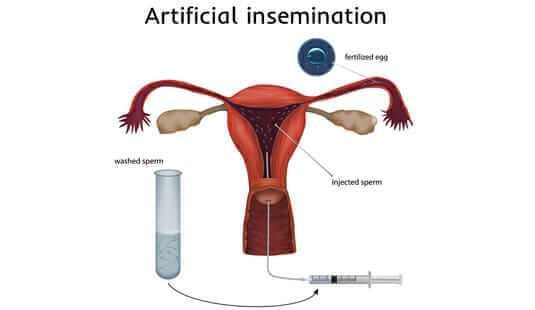
To understand why IUI fails, one must understand what happens inside the body that medical instruments cannot see or control during an insemination:
- The IUI catheter deposits sperm in the uterine cavity.
- Blind spot 1: did sperm navigate the fallopian tube?
- Blind spot 2: did the egg fertilise into an embryo?
- Blind spot 3: did the embryo cleave and reach the blastocyst stage?
- Blind spot 4: was the embryo chromosomally normal (euploid)?
- Unobserved Fertilization: During IUI, washed motile sperm are placed into the uterus. However, whether a spermatozoon successfully binds to the zona pellucida, undergoes the acrosome reaction, and fertilizes the ovulated egg inside the ampulla remains completely unobserved.
- Tubal Ciliary & Muscular Dysfunction: A standard Hysterosalpingography (HSG) confirms that liquid contrast dye can spill through the fallopian tubes. However, an HSG cannot evaluate whether the microscopic, sweeping cilia inside the tube are healthy or whether inflammatory fluid prevents smooth embryo transit. Women with subclinical tubal damage or partially blocked fallopian tubes often experience repeated IUI failure despite “patent” tubes on X-ray.
- Endometriosis & Toxic Peritoneal Milieu: In women with undetected or mild-to-moderate endometriosis, the peritoneal fluid contains elevated concentrations of inflammatory cytokines, prostaglandins, and macrophages. This hostile microenvironment degrades oocyte quality, impairs sperm flagellar motility, and blocks fertilization before the egg can even reach the uterus.
- Oocyte Quality & Embryonic Aneuploidy: In women with low AMH and diminished ovarian reserve or advanced maternal age (>35 years), anovulatory follicles or chromosomally abnormal (aneuploid) eggs frequently mature. An aneuploid embryo will stop dividing before implantation or fail to implant, regardless of how perfectly timed the insemination was.
Which Male Factors Cause IUI to Fail?
The physical success of IUI depends directly on the quality and quantity of progressively motile sperm that reach the fallopian tubes.
Post-Wash Total Motile Sperm Count (TMSC) Cutoffs
Clinical reproductive trials correlate the Post-Wash Total Motile Sperm Count (TMSC) with IUI pregnancy rates:
Post-Wash TMSC Range | Projected Clinical Pregnancy Rate per IUI Cycle | Clinical Interpretation & Recommended Strategy |
|---|---|---|
> 10 Million Motile Sperm | 12% – 18% | Optimal IUI Threshold: Excellent candidate for IUI treatment |
5 to 10 Million Motile Sperm | 8% – 12% | Borderline Threshold: Acceptable for 2–3 monitored attempts |
1 to 5 Million Motile Sperm | < 4% – 5% | Suboptimal: Steep decline in conception; early IVF recommended |
< 1 Million Motile Sperm | < 1% – 2% | Contraindicated for IUI: Significant waste of time and funds; direct ICSI required |
Couples struggling with severe oligozoospermia or poor sperm motility rarely succeed with IUI because too few competent sperm survive the uterine journey.
The Overlooked Culprit: High Sperm DNA Fragmentation (DFI)
Standard semen analysis under a microscope evaluates only sperm count, motility, and shape; it cannot see the integrity of the genetic material inside the sperm head. If a male partner has elevated sperm DNA fragmentation (DFI > 25%–30%) caused by oxidative stress, varicocele, or smoking, the sperm may look completely normal and motile on IUI day, but carry fragmented DNA strands that lead to failed fertilization or early blastocyst arrest.
How Do IUI, ICSI and IVF Compare?
When an IUI cycle fails, repeating the same protocol without investigating the underlying failure mechanism leads to frustration. The table below outlines how modern assisted reproduction systematically resolves each specific point of IUI failure:
Clinical Challenge in Failed IUI | Why IUI Failed | How Advanced IVF / ICSI Solves the Problem |
|---|---|---|
Borderline Sperm Motility / TMSC <5M | Sperm cannot navigate the cervix, uterus, and tubal isthmus | ICSI Treatment mechanically injects a single motile sperm directly into each mature egg |
Tubal Factor / Hydrosalpinx / Adhesions | Damaged cilia or anatomical distortion blocks egg-sperm union | IVF Treatment retrieves eggs directly from ovaries, bypassing fallopian tubes entirely |
Endometriosis-Induced Inflammation | Hostile pelvic fluid destroys sperm motility and egg quality | Follicles are aspirated and immediately placed in controlled cleanroom culture media |
Recurrent Implantation / Egg Aging | Unchecked chromosomal errors in unscreened embryos | Embryos are cultured to Day 5 blastocysts; PGT-A chromosomal testing is available |
Unexplained Infertility (≥3 Failed IUIs) | Hidden fertilization failure or defective sperm-zona binding | Fertilization is confirmed in the laboratory within 16–18 hours under 400x magnification |
Clinical Criteria: When Should You Stop IUI and Transition to IVF?
At Wellspring IVF & Women’s Hospital—recognized as a best fertility clinic in Ahmedabad—Dr. Pranay Shah recommends transitioning from IUI to IVF under the following clear evidence-based parameters:
- Three or Four Failed IUI Cycles: If 3 to 4 well-timed cycles with confirmed ovulation and good sperm counts fail to yield a pregnancy, further IUI attempts have a cumulative success rate of under 3%.
- Female Age ≥ 38 Years: Ovarian reserve and oocyte euploidy decline rapidly after 37. Chasing multiple low-probability IUI cycles risks losing the window for self-egg IVF.
- Diminished Ovarian Reserve (Low AMH < 1.0 ng/mL / Low AFC): In women with low AMH, time is the most critical asset. IVF maximizes every remaining follicular cohort through controlled stimulation and embryo banking.
- Post-Wash TMSC < 5 Million or Elevated DFI (>30%): Severe male factor infertility requires micromanipulation (ICSI/IMSI) in the embryology laboratory.
- Moderate to Severe Endometriosis or Bilateral Tubal Pathology: Anatomical and biochemical barriers prevent spontaneous in-vivo fertilization.
To understand IVF cost structure, visit our affordable IVF cost in Ahmedabad page.
Frequently Asked Questions (FAQ)
Does a failed IUI mean that IVF will also fail?
No. This is one of the most common misunderstandings in reproductive medicine. IUI relies entirely on natural in-vivo fertilization and spontaneous embryo transport through the fallopian tube. IVF directly overcomes the primary causes of IUI failure—including tubal blockages, fertilization failure, and poor sperm motility—by performing fertilization and embryo culture in a specialized cleanroom laboratory. Our guide on when to move from IUI to IVF explains the timing. Many couples who failed multiple IUI cycles achieve a successful pregnancy in their very first IVF attempt.
Can we do back-to-back IUI cycles, or should we take a break?
If your post-cycle baseline ultrasound on Day 2 or 3 shows no residual functional ovarian cysts, back-to-back IUI cycles are medically safe. However, taking a one-month break allows emotional rest and provides an opportunity to evaluate whether your protocol needs adjustment or whether moving to IVF is the more appropriate next step.
Why do some clinics recommend up to 6 IUI cycles?
Historically, older guidelines suggested up to 6 cycles for very young couples (under 30) with mild, unexplained infertility. However, contemporary reproductive endocrinology guidelines strongly favor transitioning after 3 to 4 cycles because over 90% of successful IUI conceptions occur within the first three cycles. Continuing beyond four cycles increases overall treatment costs and emotional burnout while delivering negligible pregnancy rates.
Scientific Citations & References
- Practice Committee of the American Society for Reproductive Medicine. (2020). Evidence-based treatments for couples with unexplained infertility: a guideline. Fertility and Sterility, 113(2), 305–322. ASRM
- Van Voorhis, B. J., et al. (2001). Effect of the total motile sperm count on the efficacy and cost-effectiveness of intrauterine insemination and in vitro fertilization. Fertility and Sterility, 75(4), 661-668. PubMed
- Cohlen, B. J., et al. (2018). IUI: review and systematic assessment of the evidence that supports global recommendations. Human Reproduction Update, 24(3), 300-319. PubMed
- National Institute for Health and Care Excellence (NICE). (2026). Fertility problems: assessment and treatment (NICE guideline NG257). Published 31 March 2026. London: NICE. NICE