

Published: 27 August 2025 | Medically reviewed by: Dr. Pranay Shah, MS (Obs. & Gyn.), GMC Reg. No. G-18311 — Founder, Director & Chief Fertility Consultant, Wellspring IVF & Women’s Hospital, Ahmedabad | Last medically reviewed: 25 October 2026
| Endometrial Receptivity Analysis (ERA) is a molecular biopsy test that measures the expression of 248 genes in the uterine lining during a mock cycle to determine whether a woman’s “window of implantation” is open at the standard 120 hours of progesterone exposure or shifted earlier or later. While early observational studies suggested promise, large randomized controlled trials (including the 2022 JAMA trial) and the 2023 ESHRE Add-Ons Guideline confirm that routine ERA testing does not increase live birth rates in first-time or standard IVF patients (58.5% with ERA vs. 61.9% with standard timing). In contemporary practice, ERA is reserved strictly for selected couples with true unexplained recurrent implantation failure after structural, genetic, and endocrine causes have been ruled out. |
When a couple goes through the physical and financial investment of creating a top-grade blastocyst—watching it expand beautifully in the laboratory, transferring it into a uterine lining that measures 9 mm with a classic triple-line pattern on ultrasound, and still receiving a negative beta-hCG test fourteen days later—the immediate question is why. For decades, clinical medicine could only evaluate the endometrium with an ultrasound caliper. If the lining looked thick enough, we assumed it was ready.
In 2011, molecular transcriptomics introduced an appealingly logical hypothesis: what if an embryo fails to implant not because the embryo is abnormal or the uterus is scarred, but because the biological clock of the uterine lining is running twelve to twenty-four hours fast or slow? That hypothesis gave rise to the Endometrial Receptivity Array (now Endometrial Receptivity Analysis, or ERA).
Because ERA is an expensive “add-on” test that requires an invasive endometrial biopsy, an extra month of hormone medication without an embryo transfer, and a mandatory freeze-all strategy, it deserves a clear-eyed look before you consent to it. Over the past four years, independent randomized controlled trials and international guideline bodies—including the European Society of Human Reproduction and Embryology (ESHRE) and the UK Human Fertilisation and Embryology Authority (HFEA)—have fundamentally changed how evidence-based clinicians view this test. Here is how the biology works, what the trials actually found, and how Dr. Pranay Shah, a leading IVF expert in Ahmedabad, approaches the question when counselling couples after a failed transfer.
The Biological Theory: What Is the Window of Implantation (WOI)?
For most of a woman’s menstrual cycle, the inner lining of the uterus (the endometrium) is actively hostile to an embryo; its surface epithelial cells are coated with anti-adhesive mucins that prevent anything from attaching. Only after ovulation—when the corpus luteum (or exogenous hormone therapy in a frozen transfer cycle) exposes the estrogen-primed lining to progesterone—does the endometrium undergo a dramatic secretory transformation.
During a brief window lasting roughly 24 to 48 hours—typically occurring 6 to 10 days after the LH surge in a natural cycle, or after approximately 120 hours (5 full days, termed P+5) of progesterone exposure in a hormonally prepared cycle—microscopic finger-like projections called pinopodes form on the endometrial surface, inflammatory cytokines and adhesion molecules (such as integrins and LIF) surge, and the lining becomes receptive to a hatching Day 5 blastocyst (Window of Implantation Physiology, RRM / Lessey et al.; PMC11282320).
If a blastocyst is placed into the cavity before this molecular gate opens, the lining is pre-receptive and the embryo may degenerate before attachment can occur. ERA is an add-on; see our IVF cost in Ahmedabad page for current packages. If the blastocyst arrives after the gate has closed, the lining has already entered its post-receptive phase. The ERA test was designed to measure whether an individual woman’s gate opens at the standard 120 hours (P+5) or is displaced by 12 to 24 hours.
Step-by-Step: How an ERA Mock Cycle and Biopsy Are Performed
One of the practical realities patients often do not realise until they are handed a prescription is that you cannot transfer an embryo in the same cycle that an ERA test is performed. Because the test requires scraping a sample of endometrial tissue at the exact hour the embryo would have been transferred, the procedure requires a dedicated “mock” cycle:
- Estrogen Priming (Days 2 to 14): Starting on Day 2 of the menstrual period, the patient takes oral or transdermal estradiol for roughly 10 to 14 days—mirroring the exact protocol of a programmed hormone-prepared frozen embryo transfer (FET) cycle—until transvaginal ultrasound confirms a trilaminar endometrial thickness of at least 7 to 8 mm and blood progesterone confirms no spontaneous ovulation.
- Timed Progesterone Initiation (P+0): Vaginal micronized progesterone pessaries and/or intramuscular progesterone injections are started at a precisely recorded clock time (for example, 8:00 AM on Day 15).
- Endometrial Pipelle Biopsy at P+5 (120 Hours): Exactly 120 hours (±3 hours) after the first progesterone dose, a thin, flexible plastic suction catheter (Pipelle) is passed through the cervix into the uterine fundus without anaesthesia (or under light analgesia if the cervix is stenotic). A small strip of endometrial tissue (roughly 50–70 mg) is aspirated, placed immediately into an RNA-stabilising cryotube, and shipped at controlled temperature to a genetics laboratory.
- Next-Generation Sequencing (248 Genes): The laboratory extracts mRNA from the tissue and analyses the transcriptional activity of 248 genes involved in endometrial receptivity, apoptosis, and cell adhesion (Mahajan, Journal of Human Reproductive Sciences).
- The Report & “Personalised Embryo Transfer” (pET) in the Next Month: After 2 to 3 weeks, the report classifies the sample into one of three categories:
- Receptive (~70%–80% of tested patients): The window of implantation is normal at P+5 (120 hours). The actual frozen blastocyst transfer is performed in a subsequent cycle using standard 120-hour progesterone timing.
- Pre-Receptive (~15%–25% of non-receptive reports): The endometrium has not yet reached full secretory maturity at 120 hours. The lab typically recommends starting progesterone 12 or 24 hours earlier (e.g., transferring at 132 or 144 hours of progesterone exposure, P+5.5 or P+6) in the next cycle.
- Post-Receptive (~5%–10% of non-receptive reports): The window has already begun closing at 120 hours. The report recommends transferring after shorter progesterone exposure (e.g., 96 to 108 hours, P+4 or P+4.5).
The Turning Point in Medical Evidence: Why Routine ERA Is No Longer Recommended
For nearly a decade after ERA launched, enthusiasm was driven by small observational studies and a 2020 open-label multicenter study suggesting that adjusting transfer timing in “non-receptive” patients could boost pregnancy rates. However, observational studies lacked a crucial control group: they did not take women with a “non-receptive” ERA result and randomise half of them to a standard 120-hour transfer to see if they would have conceived anyway.
When independent researchers finally conducted rigorous, double-blind randomized controlled trials and massive multi-centre audits, the results told a very different story:
| Clinical Study / Guideline Authority | Study Population & Sample Size | Live Birth Rate: ERA-Guided (pET) vs. Standard FET Timing | Key Clinical Conclusion & Guideline Verdict |
|---|---|---|---|
| Doyle et al., JAMA (2022) (Cited in ESHRE Add-Ons Guideline & PMC11282320) | Double-blind multicenter RCT of 767 patients undergoing single euploid (PGT-A normal) frozen blastocyst transfer | 58.5% (223/381) with ERA-guided timing vs. 61.9% (239/386) with standard timing (RR 0.95; 95% CI 0.79–1.13; no benefit) | ERA-guided timing did not improve live birth rates; even among patients flagged as “non-receptive,” adjusting progesterone hours produced no significant gain over standard timing. |
| Cozzolino et al. (2022) (Cited in ESHRE Good Practice Recommendations, PMC10628516) | Large multicentre cohort of 5,372 embryo transfers in women with previous failed transfers (autologous & donor cycles) | Significantly lower LBR and cumulative LBR in the ERA + pET group compared with standard transfer without receptivity testing | Routine receptivity biopsy in patients with a prior failed transfer did not improve outcomes and delayed time to pregnancy. |
| ESHRE Add-Ons Working Group (Nov 2023) (Human Reproduction, Vol. 38, Issue 11) | Systematic evidence review across all published RCTs and cohorts on endometrial receptivity tests | Concluded there is insufficient evidence of efficacy to support endometrial receptivity tests in routine ART | Not Recommended for routine clinical practice in IVF/FET cycles. |
| UK HFEA Traffic-Light Rating (2023–2026) (HFEA Endometrial Receptivity Testing) | National regulatory evidence grading by the UK Human Fertilisation and Embryology Authority | Rated RED for most fertility patients | Rated Red because moderate-to-high-quality evidence indicates the test does not improve—and may reduce—the chance of having a baby while adding biopsy discomfort and cycle delay. |
Why Does a “Shifted Window” Test Often Fail to Change Live Birth Rates?
When patients read the JAMA and ESHRE findings, they understandably ask: “If the biology of the Window of Implantation is real, why doesn’t the ERA test reliably boost live birth rates?” Reproductive scientists point to three biological realities highlighted by the HFEA and the 2023 ESHRE Recurrent Implantation Failure Working Group (PMC10270320):
- The Human Implantation Window Is Wider Than a 12-Hour Pinpoint: In a healthy uterus, a vigorous Day 5 blastocyst and a well-prepared endometrium engage in active molecular cross-talk. The window is typically 36 to 48 hours wide, meaning a minor 12-hour variation rarely blocks a chromosomally normal embryo from implanting.
- Cycle-to-Cycle Biological Variability: An ERA biopsy measures how your uterine lining responded to hormone tablets and pessaries in Month A. Yet absorption of vaginal progesterone, serum progesterone levels, and local endometrial receptor expression can vary naturally between Month A and Month B. If the test shifts your transfer timing based on a single mock cycle that does not replicate identically the next month, the adjustment can inadvertently move the transfer out of the optimal window.
- Most Implantation Failures Are Embryonic or Structural—Not Transcriptomic: When an untested blastocyst fails to implant, chromosomal aneuploidy in the embryo—or a correctable anatomical issue inside the uterine cavity—is responsible far more often than a shifted gene-expression clock.
What We Investigate First Before Ever Considering an ERA Test
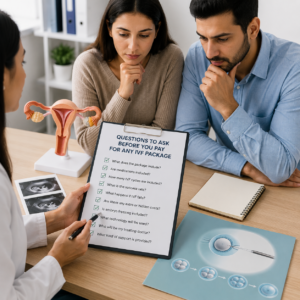
At Wellspring IVF & Women’s Hospital, we follow the principle set out in our guide on 10 questions to ask before paying for any IVF package or add-on: never charge a couple for an expensive add-on test when a foundational clinical investigation gives a clearer, proven answer.
Before a couple with one or two unsuccessful transfers is ever counselled about transcriptomic testing, Dr. Pranay Shah systematically evaluates the five factors that actually drive recurrent implantation failure (RIF) evaluation and treatment:
- 1. Direct Hysteroscopic Evaluation of the Uterine Cavity: Transvaginal 2D ultrasound routinely misses micropolyps, subtle intrauterine adhesions (synechiae), a small arcuate/subseptate uterus, or chronic endometritis (a silent plasma-cell inflammation of the uterine lining caused by low-grade bacterial colonisation). Performing a 10-minute diagnostic and operative office hysteroscopy—and treating chronic endometritis with targeted antibiotics or removing a submucous polyp—directly restores implantation potential in a way a gene array cannot.
- 2. Measuring Actual Serum Progesterone on FET Transfer Morning: In hormonally prepared FET cycles using vaginal micronized progesterone, up to 25% of women absorb vaginal pessaries poorly and have serum progesterone levels below 9.2–10.0 ng/mL on the day of transfer. When serum progesterone is low, the endometrium looks “pre-receptive” not because of a genetic disorder, but simply because tissue progesterone levels are inadequate—a problem solved immediately by adding subcutaneous or intramuscular progesterone rescue without needing an ₹50,000 ERA biopsy.
- 3. Ruling Out Silent Hydrosalpinx or Adenomyosis: Fluid trickling backward into the uterine cavity from a dilated fallopian tube (hydrosalpinx) acts as a mechanical wash and embryotoxic barrier, cutting IVF implantation in half. Likewise, junctional-zone adenomyosis or managing a persistently thin endometrium requires targeted medical suppression or endometrial preparation adjustments rather than a clock shift.
- 4. Switching from a Programmed (HRT) FET to a True or Modified Natural-Cycle FET: In women who ovulate regularly, preparing the lining in a natural cycle (where the woman’s own corpus luteum produces endogenous progesterone, relaxin, and vasoactive factors) often resolves receptivity issues organically.
- 5. Embryo Chromosomal & Paternal Sperm DNA Assessment: Evaluating blastocyst euploidy and checking male-partner sperm DNA fragmentation index (DFI) ensures we are not blaming the uterus for an embryonic factor.
Is There Any Situation Where ERA May Still Be Considered?
Yes—in a very narrow, carefully counselled subset of patients. In alignment with the 2023 ESHRE Good Practice Recommendations on Recurrent Implantation Failure, Dr. Pranay Shah may discuss endometrial receptivity testing as an optional, last-line investigation only when all of the following criteria are met:
- The couple has experienced three or more failed transfers of high-grade (or PGT-A confirmed euploid) blastocysts.
- Office hysteroscopy has confirmed a completely normal uterine cavity free of polyps, septum, adhesions, and chronic endometritis.
- Hydrosalpinx, thyroid/endocrine disorders, antiphospholipid syndrome, and low transfer-day serum progesterone (<10 ng/mL) have already been excluded or corrected.
- The couple has only one or two precious remaining frozen blastocysts (for example, from a final self-egg Low-AMH cohort or a single-donor ART Bank cohort) and wishes to exhaust every theoretical uterine parameter before transferring their final embryo, with full informed consent regarding the JAMA RCT evidence and cost.
Frequently Asked Questions
Is the ERA biopsy painful, and does it require anaesthesia?
The biopsy takes less than two minutes in the outpatient procedure room and does not usually require general anaesthesia. Because the thin Pipelle catheter passes through the internal cervical os and aspirates a strip of endometrial tissue, most women feel a sharp, menstrual-like cramp lasting 30 to 60 seconds, followed by mild pelvic ache or light spotting for 24 to 48 hours. Simple oral pain relief taken an hour before the appointment makes it well tolerated.
Can we do an ERA test in a natural cycle and then do a hormone-prepared (HRT) frozen transfer next month?
No. Endometrial gene expression responds differently to exogenous estradiol and progesterone tablets than it does to a natural ovulation cycle. Whatever protocol is used during the ERA mock cycle must be replicated identically (same route of estrogen, same dose and route of progesterone, and same number of progesterone hours) in the subsequent embryo transfer cycle.
Does an ERA result stay valid forever if we want a second child years later?
Not reliably. Significant weight changes, a full-term pregnancy and delivery, uterine surgery, advancing age, or development of adenomyosis/fibroids can alter endometrial hormone receptor dynamics over time. Even in consecutive cycles, researchers debate how stable a displaced window remains.
How much does an ERA test cost in India, and why is it billed separately from IVF?
Because the tissue sample must be shipped to a specialised molecular genetics laboratory for 248-gene next-generation sequencing—and because you also pay for a full month of mock-cycle estrogen/progesterone medications and ultrasound monitoring—an ERA cycle in India typically adds ₹40,000 to ₹65,000+ on top of your FET cycle cost. That substantial financial and emotional cost is precisely why we do not recommend it for first-time IVF patients. ERA is used only within an IVF cycle, before a frozen transfer.
Seeking an Honest Second Opinion After Failed IVF
If you have experienced one or more unsuccessful embryo transfers elsewhere and have been told you must pay for an ERA test, immune panels, or multiple add-ons before trying again, a structured audit of your previous stimulation sheets, embryology records, and uterine cavity is the most productive next step. For couples looking for the IVF hospital in Ahmedabad for transparent, guideline-based second opinions, Dr. Pranay Shah personally reviews every previous cycle record to identify what genuinely needs to change—and what you do not need to pay for.
- Clinic Address: Wellspring IVF & Women’s Hospital (Registered Level 2 ART Clinic No. GS/AHD/024), Titanium City Center Mall, 440, 100 Feet Anandnagar Road, near Sachin Tower, Satellite, Ahmedabad, Gujarat 380015
- Telephone & WhatsApp: +91 90999 46050
- OPD Timings: Monday to Saturday, 10:00 AM to 4:00 PM
References
- Doyle N, Jahandideh S, Hill MJ, Widra EA, Levy M, Devine K. Effect of Timing by Endometrial Receptivity Testing vs Standard Timing of Frozen Embryo Transfer on Live Birth in Patients Undergoing In Vitro Fertilization: A Randomized Clinical Trial. JAMA. 2022;328(21):2117–2125. (Detailed in ESHRE Add-Ons Working Group, Human Reproduction 2023 & PMC11282320).
- ESHRE Add-ons working group, Lundin K, Bentzen JG, Bozdag G, Ebner T, Harper J, et al. Good practice recommendations on add-ons in reproductive medicine. Human Reproduction. 2023;38(11):2062–2086. (PMC10628516).
- ESHRE Working Group on Recurrent Implantation Failure, Cimadomo D, de los Santos MJ, Griesinger G, Lainas G, Le Clef N, et al. ESHRE good practice recommendations on recurrent implantation failure. Human Reproduction Open. 2023;2023(3):hoad023. (PMC10270320).
- Human Fertilisation and Embryology Authority (HFEA). Treatment add-ons with limited evidence: Endometrial receptivity testing. London: HFEA; Updated October 2023.
- Sharma M, Dubey P, Sunda U, Tilva H. A Comprehensive Review of the Endometrial Receptivity Array in Euploid Embryo Transfer Cycles. Cureus. 2024;16(6):e63189.
- Mahajan N. Endometrial receptivity array: Clinical application. Journal of Human Reproductive Sciences. 2015;8(3):121–129.