
Published: 6 November 2026
Medically reviewed by Dr. Pranay Shah, MS (Obs. & Gyn.), Founder, Director & Chief Fertility and IVF Specialist, Wellspring IVF & Women’s Hospital, Ahmedabad
Last medically reviewed: 6 November 2026
In short: in most cases, no. Most health insurance policies in India exclude IVF. The Insurance Regulatory and Development Authority of India (IRDAI) allows insurers to apply a standard exclusion, coded Excl17, for sterility and infertility. It covers assisted reproduction such as IUI, IVF, ICSI, GIFT and ZIFT, and gestational surrogacy. Some specialised products, add-ons and employer group policies do offer limited infertility cover, so it is always worth checking your own policy wording.
What the IRDAI rule actually says
In September 2019 IRDAI standardised the exclusions that insurers may use in health policies, so that the same exclusion is worded the same way in every policy. A February 2020 circular set the current wording of the sterility and infertility exclusion. Insurers that exclude these treatments must use this standard text and code. Under Excl17, a policy may exclude expenses related to:
- contraception, sterilisation and reversal of sterilisation;
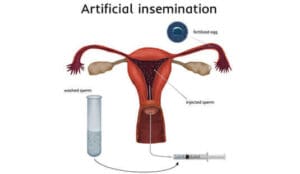
- assisted reproduction services, including artificial insemination (IUI) and advanced reproductive technologies such as IVF, ZIFT, GIFT and ICSI;
- gestational surrogacy.
The exclusion is permitted, not compulsory. An insurer can choose to cover infertility, and a few do through specific products or riders. In practice, however, most standard retail policies sold in India carry Excl17.
What may still be covered
An infertility exclusion does not mean that everything connected with fertility is excluded. Policies generally cover treatment of a disease, even when that disease also affects fertility. Examples that are often claimable, subject to your policy terms:
- Laparoscopy for endometriosis, ovarian cysts or a blocked, fluid-filled tube (hydrosalpinx).
- Hysteroscopic removal of polyps, fibroids or a uterine septum.
- Treatment of thyroid disease, diabetes or infections found during fertility tests.
- Hospital admission for a medical complication, if your policy wording does not exclude it.
The deciding factor is usually the diagnosis and how the procedure is documented. Ask your insurer for pre-authorisation before planned surgery. Our page on laparoscopy for infertility explains when such surgery is genuinely needed and when it is not.
Employer group policies and add-ons
Group health policies negotiated by employers can be broader than retail policies, and some include a maternity or infertility benefit with a sub-limit. If you are employed, ask HR for the policy schedule rather than relying on the brochure. If you are buying a policy yourself, read the exclusions section and look for Excl17; if it is listed, IVF is not covered.
How to plan IVF costs when insurance does not pay
Because most couples pay for IVF themselves, the most useful protection is a clear estimate before you start. India’s ART (Regulation) Act 2021 requires clinics to explain the procedure, its advantages and disadvantages, and its cost before you consent. Ask for these points in writing:
- What the package includes: consultations, scans, egg collection, anaesthesia, laboratory work, embryo culture and transfer.
- What it excludes: medicines, freezing and storage, frozen embryo transfer, and genetic testing.
- Likely medicine cost for your protocol, since injections can be a large part of the total.
- Add-ons and whether each one is supported by evidence for your situation.
- What happens if a cycle is cancelled, and whether any amount is adjusted.
You can compare these items against our IVF package prices in Ahmedabad, which list inclusions and exclusions line by line. Our article on questions to ask before you pay for IVF goes further.
Ways to avoid unnecessary spending
- Skip unproven add-ons. Several popular extras, such as routine endometrial scratching or ICSI when semen is normal, do not improve live birth rates for most couples.
- Prefer single embryo transfer. Twins carry higher medical risks, and neonatal intensive care is costly and usually not covered by insurance either. See single versus double embryo transfer.
- Treat the cause first. Correcting a polyp or a thyroid problem before IVF can be cheaper than a failed cycle.
If you would like a written estimate for your own case, our team at Wellspring IVF in Satellite, Ahmedabad will prepare one after reviewing your reports, and our IVF treatment page explains each medical step behind the price. You can also see what our IVF packages include before you visit.
How to check your own policy in five minutes
- Open the policy wording, not the brochure. The brochure lists benefits; the policy wording lists exclusions. You can usually download it from the insurer’s website or ask for it by email.
- Find the “Standard Exclusions” section and search for “Excl17”, “sterility”, “infertility” or “assisted reproduction”. If any of these appear, IVF and IUI are excluded.
- Look for a maternity or infertility benefit in the benefits table, and note any sub-limit (a maximum amount) and waiting period.
- Read the “specific exclusions” as well. Some policies separately exclude complications arising from excluded treatment, which matters if a complication of IVF needs hospital care.
- Get a written answer. Email the insurer or your TPA with your question and keep the reply. A written answer is far more useful than a phone call if a claim is disputed later.
What one IVF cycle is made up of
Understanding the parts of the bill makes it easier to compare estimates and to see where an insurer might pay for part of the care. A typical IVF cycle includes:
- Assessment: consultation, ultrasound, AMH and other hormone tests, semen analysis and infection screening.
- Medicines: injections to stimulate the ovaries, medicines to prevent early ovulation, the trigger injection, and progesterone support after transfer. The dose depends on age, AMH and response, so this is the part that varies most between patients.
- Procedures: monitoring scans, egg collection under anaesthesia, and embryo transfer.
- Laboratory work: fertilisation by IVF or ICSI, embryo culture to day 3 or day 5, and embryo grading.
- Optional or later costs: freezing and storage of extra embryos, frozen embryo transfer, genetic testing (PGT) and repeat cycles.
Assessment tests and surgery for a disease are the items most likely to be claimable; the IVF cycle itself, its medicines and laboratory work are the items usually excluded.
Pregnancy after IVF: is maternity cover affected?
Once you are pregnant, delivery and antenatal care fall under the maternity benefit of your policy, if it has one. Two points matter. First, most retail policies have a waiting period for maternity cover, often between nine months and four years, so it must already have been served. Second, a few policies exclude or limit pregnancies that result from assisted reproduction. Group policies from employers often have shorter or no waiting periods. Check both points in writing before treatment starts, so that you know how a later delivery or a pregnancy complication will be handled.
Complications of treatment and hospital admission
Serious complications of IVF are uncommon, but some, such as severe ovarian hyperstimulation syndrome (OHSS), may need admission to hospital. Insurers do not all treat these claims the same way: some pay for the hospital care of the complication, while others reject the claim as arising from an excluded treatment. Modern protocols, such as antagonist cycles with an agonist trigger and freezing all embryos when the risk is high, have made severe OHSS much less common. Ask your doctor how your protocol reduces the risk, and ask your insurer in advance how such a claim would be assessed.
If a valid claim is rejected
If your insurer rejects a claim for treatment of a disease, such as surgery for endometriosis or fibroids, on the grounds that it is “infertility treatment”, you can challenge the decision:
- Ask the insurer for the rejection reason in writing, citing the exact policy clause.
- Ask your doctor for a letter that sets out the diagnosis and why the procedure was medically necessary, with the operative and histopathology reports.
- Complain to the insurer’s grievance redressal officer. IRDAI’s Bima Bharosa portal can be used to register and track the complaint.
- If the complaint is not resolved, you may approach the Insurance Ombudsman for your region, a free service for policyholders.
Paying for IVF: practical options
- Employer benefits: check group health cover and any wellness or family-building benefit before paying privately.
- Staged payment: many clinics bill in stages, such as at the start of stimulation and at egg collection, rather than all at once.
- Medical loans or EMI plans: available through banks and lenders; compare the interest rate, processing fee and any penalty for early repayment, and borrow only what the written estimate supports.
- Planning for more than one transfer: freezing good embryos from one egg collection can make a later attempt cheaper than starting again from the beginning.
Whatever the source of funding, decide the plan from medical need first and the budget second, and be wary of any package that asks you to pre-pay for several cycles before you have been assessed.
Frequently asked questions
Is IVF covered by health insurance in India?
Usually not. Most retail health policies carry IRDAI’s standard exclusion Excl17, which excludes assisted reproduction such as IUI, IVF, ICSI, GIFT and ZIFT, and gestational surrogacy. A few specialised products, add-ons and employer group policies offer limited infertility cover, so check your own policy wording.
Does insurance cover laparoscopy or hysteroscopy done before IVF?
It may. When surgery treats a disease, such as endometriosis, fibroids, polyps or a blocked, fluid-filled tube, many policies treat it as ordinary hospitalisation. Coverage depends on your policy and on how the procedure is documented, so ask your insurer for pre-authorisation.
Does my employer’s group health policy cover IVF?
Some group policies do, because employers can negotiate wider cover than retail policies. Ask your HR team for the policy schedule and look for a maternity or infertility benefit and its sub-limit.
Can I claim a tax deduction for IVF?
IVF is generally not listed for specific deductions under the Income Tax Act, and premiums for policies that exclude IVF do not change that. Speak to a tax adviser for your own situation.
How can I keep IVF costs predictable without insurance?
Ask for a written, itemised estimate that lists what is included and excluded, the likely medicine cost for your protocol, and the price of add-ons such as ICSI, PGT and embryo freezing. Avoid unproven add-ons and choose single embryo transfer to reduce the costs of a twin pregnancy.
Will health insurance pay for my delivery if I conceive through IVF?
Often yes, if your policy has a maternity benefit and its waiting period has already been served. A few policies limit or exclude pregnancies resulting from assisted reproduction, so confirm this with your insurer in writing before treatment starts.
Is hospital admission for OHSS covered by insurance?
It depends on the insurer. Some pay for the hospital care of the complication; others reject it as arising from excluded infertility treatment. Ask your insurer in advance, and ask your doctor how your protocol lowers the risk of severe OHSS.
What can I do if my claim for fertility-related surgery is rejected?
Ask for the reason in writing, get a letter from your doctor explaining the diagnosis and medical need, complain to the insurer’s grievance officer or through IRDAI’s Bima Bharosa portal, and if it is not resolved, approach the Insurance Ombudsman, which is free for policyholders.
Sources
- IRDAI, Guidelines on Standardization of Exclusions in Health Insurance Contracts (27 September 2019) and circular IRDAI/HLT/REG/CIR/046/02/2020.
- The Assisted Reproductive Technology (Regulation) Act, 2021.
Insurance products change often. This article is general information, not financial or insurance advice; always rely on your own policy wording and your insurer’s written answer.