
Azoospermia Treatment in Ahmedabad — Zero Sperm Does Not Mean Zero Hope
Zero Sperm Count Treatment | Wellspring IVF & Women's Hospital, Ahmedabad
⚡ Azoospermia — At a Glance
| Condition | Azoospermia — complete absence of sperm in the ejaculate |
| Prevalence | Affects ~1% of all men; found in 10–15% of infertile men |
| Two Main Types | Obstructive (Production OK, Pipe Blocked) vs. Non-Obstructive (Production Issue) |
| Can I Father a Child? | YES. Most men with Azoospermia still produce sperm in the testes. |
| Treatment | Surgical Sperm Retrieval (TESA / PESA / Micro-TESE) + ICSI |
| Our Success Rate | High retrieval rates for Obstructive Azoospermia. |
| TESA Cost | ₹25,000 at Wellspring IVF. See full TESA/PESA cost & inclusions |
| Specialist | Dr. Pranay Shah — Expert in Male Fertility & Surgical Sperm Retrieval |
| Consultation | 📞 9099946050 | Private & Confidential |
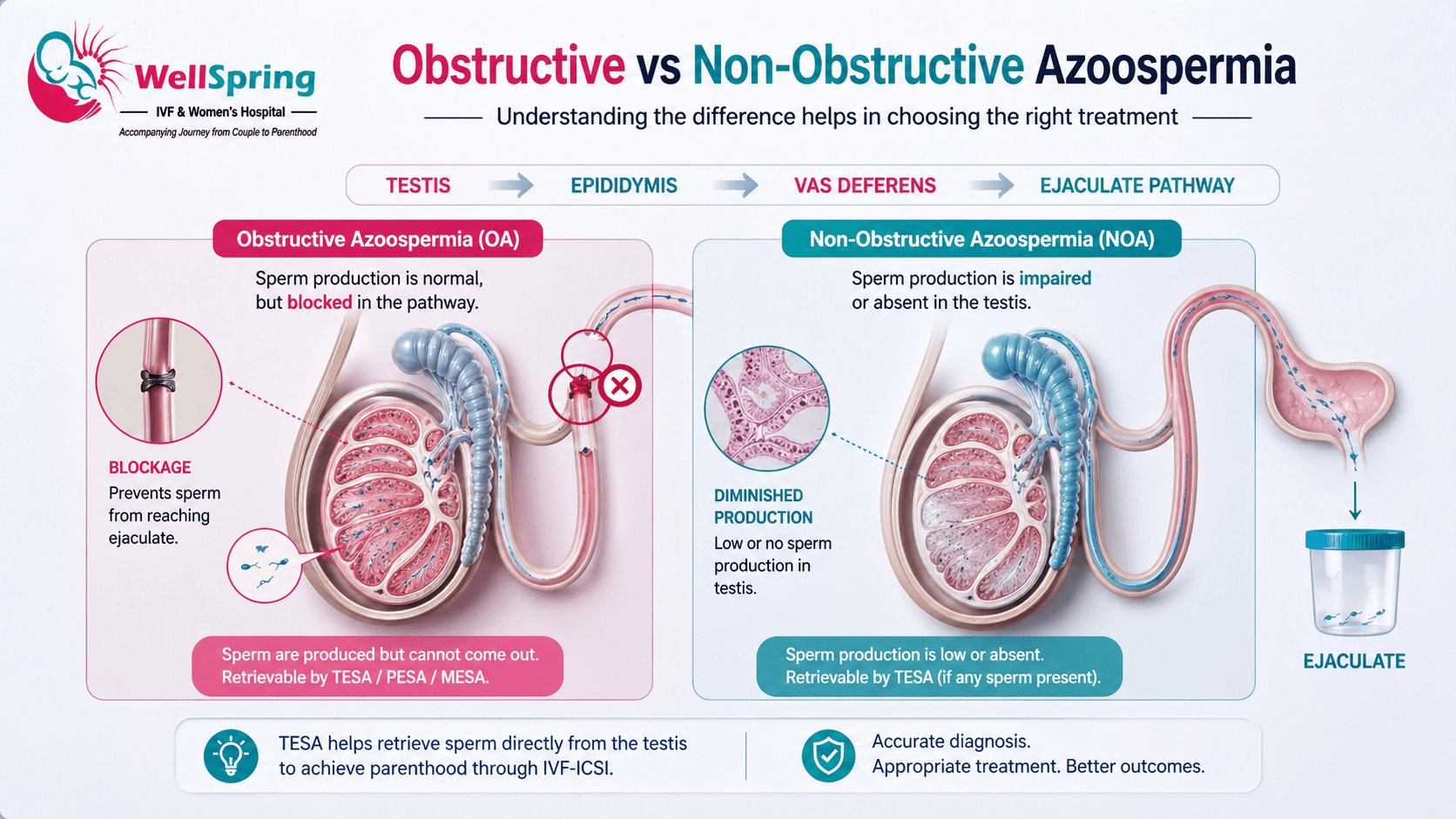
Understanding Azoospermia: Why Is My Count Zero?
Type 1: Obstructive Azoospermia — The Blocked Pipe
What it is: Your testicles are producing sperm perfectly normally, but the “pipes” (vas deferens or epididymis) that carry sperm to the penis are blocked or missing.
Common Causes: Previous vasectomy, infection, congenital absence of vas deferens (CBAVD), or trauma.
The Good News: This is the “best” type to have. We can almost always retrieve healthy sperm directly from the testes using a simple needle procedure (TESA/PESA).
Type 2: Non-Obstructive Azoospermia — The Production Issue
What it is: The testicles are having trouble producing sperm, or are producing very low amounts that do not make it all the way out.
Common Causes: Hormonal imbalances, genetic factors (like Klinefelter syndrome or Y-chromosome microdeletion), undescended testes, or past mumps infection.
The Solution: While harder to treat than obstructive cases, it is not impossible. Multiple studies on Male infertility suggest that advanced retrieval techniques like Micro-TESE can often find small “islands” of sperm production inside the testicle.
Genetic Testing Before Treatment in Azoospermia
Genetic Testing Before Treatment: Why It Matters
For many men with non-obstructive azoospermia or severe oligospermia, the underlying cause is genetic. Standard pre-treatment workup includes a karyotype test (to check for chromosomal anomalies like Klinefelter syndrome, 47,XXY) and Y-chromosome microdeletion testing (checking the AZFa, AZFb, and AZFc regions). For genetic causes such as Klinefelter or Y-microdeletion, PGT-A / PGT-M genetic testing can screen embryos before transfer.
According to European Association of Urology (EAU) male infertility guidelines, identifying these factors helps determine the exact prognosis for surgical sperm retrieval. For instance, certain Y-chromosome microdeletions (such as AZFa or AZFb) indicate a near-zero chance of successful sperm retrieval, saving couples from unnecessary surgical procedures. Additionally, if congenital bilateral absence of the vas deferens (CBAVD) is detected in obstructive cases, genetic screening for CFTR gene mutations is essential for the female partner to prevent passing on cystic fibrosis.
Learn more about comprehensive diagnostic protocols on our Surgical Sperm Retrieval Page.
Watch Our Azoospermia Treatment Video
Learn about azoospermia (zero sperm count), its causes, and the treatment options available to achieve biological parenthood.
What You Will Learn
Understand how azoospermia is diagnosed and managed using modern fertility techniques.
- Causes of zero sperm count
- Types of azoospermia explained
- Sperm retrieval treatment options
- Fatherhood possibilities with IVF/ICSI
How We Retrieve Sperm: TESA, PESA, and Micro-TESE
PESA — Percutaneous Epididymal Sperm Aspiration
Best For: Obstructive Azoospermia (e.g., after vasectomy).
Procedure: A tiny needle is inserted into the epididymis (the storage coil above the testicle) to gently aspirate sperm.
Invasiveness: Very Low — no cut, no stitches.
Anaesthesia: Local. Day procedure — patient goes home the same day.
TESA — Testicular Sperm Aspiration
Best For: Obstructive Azoospermia where PESA fails, or selected Non-Obstructive cases.
Procedure: A fine needle is inserted directly into the testicle to aspirate tissue containing sperm.
Invasiveness: Low — performed under local anaesthesia. No stitches required.
Cost: From ₹25,000 at Wellspring IVF — see full TESA/PESA cost & inclusions on our surgical sperm retrieval page. Any surplus sperm is preserved by sperm cryopreservation, avoiding a repeat retrieval for future cycles.
Micro-TESE — Microscopic Testicular Sperm Extraction
Best For: Severe Non-Obstructive Azoospermia where TESA has not found sperm.
Procedure: An advanced procedure using a high-powered operating microscope to search for tiny tubules that may contain sperm. This offers the highest chance of finding sperm when other methods fail.
Anaesthesia: General or spinal. Short OT procedure with 1–2 days rest recovery.
Success Rate: 40–60% in NOA cases. Even a single retrieved sperm is sufficient for ICSI.
What Our Patients Say


A special thank you to Dr. Pranay Shah for his confidence, guidance, and the way he explained everything so patiently. His positive approach gave me so much strength, and today I am blessed with my baby.
Thank you to each and every member of the hospital for taking such great care of me and supporting me throughout this journey. Forever grateful. 💕

He is, without a doubt, the most patient doctor I have ever met. Of course, treatment can be done by many. What truly sets him apart is his maturity, the way he pauses, explains, comforts, and most importantly, seeks your permission before moving forward. You never feel rushed. You never feel unheard. You feel respected.
And the staff deserves equal appreciation. They handle even the most anxious and impatient moments with such calm grace and dignity that you slowly find your own heartbeat settling down. It feels less like a clinic and more like a safe space.
I wholeheartedly recommend him to anyone who overthinks, seeks reassurance, or simply needs a doctor who believes comfort is the first step of healing. With him, care begins long before the treatment does.

Highly recommend for their expertise, kindness and dedication. "Turned out dream into reality"



Our gratitude also extends to everyone in your clinic who offered a smile, reassurance, technical support, or a listening ear along the way. We feel incredibly blessed to have chosen your practice for our journey, and we will always cherish the precious gift you helped us receive.
Thank you, from the bottom of our hearts, for making our dream a reality.
800+ Positive Google Reviews
The Treatment Path: From Retrieval to Fatherhood
For most men with azoospermia, surgical sperm retrieval (TESE / PESA) can recover viable sperm directly from the testis or epididymis — over 90% of the time in obstructive cases — for use with ICSI. Finding the sperm is step one. Using it to create a baby is step two. Because retrieved sperm are typically immature (they have not yet fully developed motility), they cannot be used for simple IUI. They must be used with IVF and ICSI (Intracytoplasmic Sperm Injection).
- Diagnosis: We perform a physical exam and hormone blood tests (FSH, LH, Testosterone) to determine if your case is Obstructive or Non-Obstructive.
- Partner Preparation: Your female partner prepares for IVF egg collection simultaneously — no time is wasted.
- Sperm Retrieval: On the day of her egg collection (or before, to freeze the sperm), Dr. Shah performs the TESA / PESA / Micro-TESE procedure.
- ICSI for Azoospermia: Our embryologist takes a single, live sperm from the retrieved tissue and injects it directly into the egg under a powerful microscope. Once sperm is recovered via TESE or PESA, ICSI with surgically retrieved sperm is the only technique that can achieve fertilisation from the tiny numbers found.
- Embryo Transfer: The fertilised embryo is cultured in our advanced IVF lab and transferred to the uterus.
Dr. Shah’s Advice on Backup Donor Sperm
“In difficult non-obstructive cases, we always have an honest conversation. We will fight hard to find your sperm. But we also recommend having a backup plan — donor sperm ready — just in case no sperm are found on the day of surgery. This ensures your partner’s egg collection cycle is not wasted. The choice is always 100% yours.”
— Dr. Pranay Shah, MS (ObGy), Director & Chief Fertility Consultant, Wellspring IVF
Your Fertility Consultant
Our fertility specialists are committed to providing personalized, compassionate care with
the latest reproductive medicine techniques.

Dr. Pranay Shah
Divyesh Bhalodia

Urmi Chauhan
Obstructive vs. Non-Obstructive Azoospermia — Quick Comparison
Obstructive Azoospermia (OA) | Non-Obstructive Azoospermia (NOA) |
|---|---|
Sperm production: NORMAL | Sperm production: IMPAIRED |
Problem: Blocked or absent pipes | Problem: Testes struggle to produce sperm |
Causes: Vasectomy, infection, CBAVD | Causes: Genetic, hormonal, varicocele, unknown |
FSH: Usually Normal | FSH: Usually Elevated |
Testis size: Usually Normal | Testis size: Often Smaller |
Retrieval method: PESA or TESA | Retrieval method: TESA mapping or Micro-TESE |
Retrieval success: Nearly 100% | Retrieval success: 40–60% depending on cause |
Talk to Dr. Shah About Azoospermia Treatment
Frequently Asked Questions
Is TESA / PESA painful?
Most men are surprised by how manageable it is. We perform it under local anaesthesia or short sedation. You will feel a prick, but no sharp pain. You can usually go home after 2–3 hours and return to work the next day.
What is the success rate of finding sperm?
For Obstructive Azoospermia, the success rate of finding sperm is nearly 100%. For Non-Obstructive Azoospermia, it varies between 40–60% depending on the cause and hormone levels.
Can I have a child with my own genes if I have zero sperm count?
Yes, absolutely. If we can retrieve even a few healthy sperm from your testes, they carry your DNA. The resulting child will be biologically yours in every sense.
What is the TESA / PESA cost at Wellspring IVF Ahmedabad?
At Wellspring Fertility Clinic Ahmedabad, we believe in transparent pricing. TESA and PESA costs ₹25,000 — For detail Tesa & Pesa Cost guide you can read TESA & PESA Guidance. . The IVF + ICSI cycle cost is discussed separately at consultation with no hidden charges.
What if TESA fails to find sperm?
A failed TESA in a NOA case does not mean it is over. We can escalate to Micro-TESE, which uses an operating microscope at 20–40x magnification to examine testicular tissue in far greater detail. Micro-TESE finds sperm in a significant number of cases where TESA has failed.
Will my son inherit Azoospermia?
If your Azoospermia has a genetic cause (e.g., Y-chromosome microdeletion), there is a possibility of passing this to a son. Dr. Shah will discuss Preimplantation Genetic Testing (PGT-A) as an option to select chromosomally normal embryos and reduce this risk. You will be counselled fully before making any decision.
Does zero sperm count affect my testosterone levels or sex drive?
Not necessarily. Azoospermia refers strictly to the absence of sperm in your semen, which is the reproductive function of the testicles. The hormonal function—producing testosterone—is often completely normal, especially in Obstructive Azoospermia. Most men with a zero sperm count have a normal sex drive, normal erections, and healthy energy levels. If a hormonal imbalance is the root cause (common in some Non-Obstructive cases), it can easily be evaluated with a simple blood test and managed medically.
What is the difference between Obstructive and Non-Obstructive Azoospermia (OA vs NOA)?
Obstructive Azoospermia (OA) means your testicles are producing sperm normally, but the tubes carrying them are blocked or missing (due to infection, vasectomy, or CBAVD), yielding a retrieval success rate near 100%. Non-Obstructive Azoospermia (NOA) is a production issue where the testicles produce very few or no sperm due to hormonal or genetic factors, with retrieval success rates between 40–60%.
What is the micro-TESE success rate for azoospermia?
For Non-Obstructive Azoospermia (NOA), advanced microscopic testicular sperm extraction (Micro-TESE) has a sperm retrieval success rate of 40–60%. By using high-powered surgical magnification to scan tiny tubules, it frequently finds hidden pockets of sperm even when standard TESA has failed.
Can azoospermia be treated without surgery?
It depends entirely on the root cause. If azoospermia is caused by a hormonal imbalance (such as hypogonadotropic hypogonadism, common in some non-obstructive cases), it can often be treated medically with hormone therapy to restore sperm production. However, if the condition is due to physical blockages or severe production failure, surgical sperm retrieval (TESA, PESA, or Micro-TESE) combined with ICSI is necessary to achieve a biological pregnancy.
Related Pages — Male Infertility at Wellspring IVF
Related Insights & Articles
 Published: 15 September 2026 Medically reviewed by Dr. Pranay Shah, MS (ObGy), Director & Chief Fertility Consultant, Wellspring IVF &…September 15, 2026
 How to Increase Sperm Count Naturally: A Fertility Specialist's Guide Quick Answer Yes, it is often possible to increase sperm…June 11, 2026
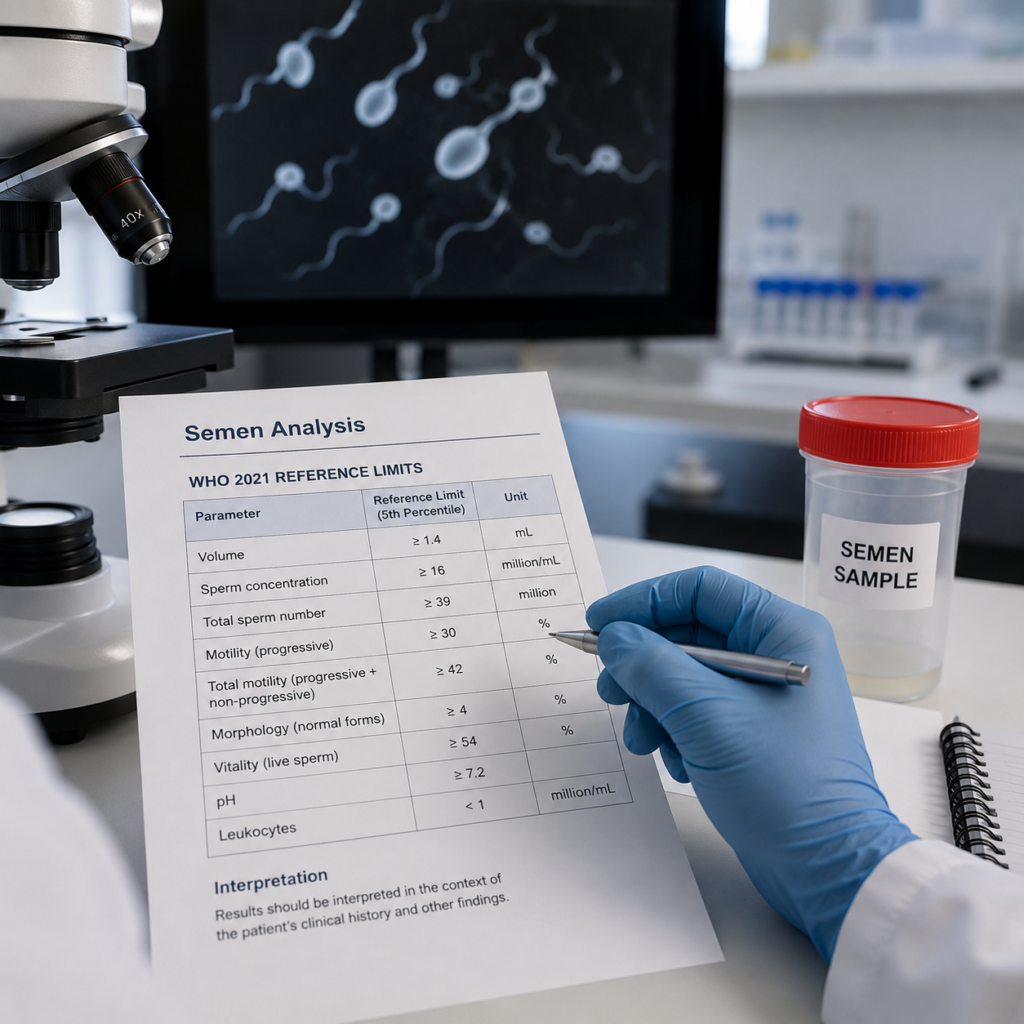
 Most men receive their semen analysis report as a printout of numbers — without anyone explaining what those numbers mean.…June 5, 2026
Take the First Step in Private
Your fatherhood journey is not over. It just needs a different path.